Gold Country Field Guide
The 7-30 Waters Cartridge Guide: Rifles, Bullets, Ammunition and What to Verify
A practical 7-30 Waters reference for identifying the rifle platform, understanding the cartridge's verified Ken Waters history, evaluating bullet choices, distinguishing changing availability states, and seeing exactly where published evidence ends.
A practical reference for understanding the cartridge, separating lever-rifle and single-shot decisions, finding current ammunition, and evaluating 120- and 139-grain bullet options without confusing design intent with tested results.
The short answer
The 7-30 Waters is a 7mm centerfire rifle cartridge developed from the .30-30 Winchester case. It is most closely associated with Winchester Model 94 lever rifles, although it has also been used in single-shot platforms.
That platform distinction matters. A bullet that fits one rifle, feeds through one action, or suits one magazine system is not automatically the right answer for every 7-30 Waters. Before choosing ammunition or components, identify the rifle, confirm the chamber marking, and determine whether cartridges will be used in a tubular magazine or loaded directly into a single-shot chamber.
This guide separates enduring facts from the changing market. It explains what to verify in the rifle, how bullet profile and weight enter the decision, what “available” actually means, and where the current evidence stops.
Safety first: Use only ammunition of the exact caliber marked on the firearm. Follow the firearm manufacturer’s manual and current pressure-tested loading data. This guide is a decision reference, not load data.
Use this guide
This page is the permanent 7-30 Waters reference hub. Continue with the page that matches the decision you need to make:
- Find ammunition: use the 7-30 Waters ammunition buyer’s guide.
- Choose a component bullet: use the lever-action bullet guide.
- Compare 120 and 139 grains: use the evidence comparison.
- Follow the evidence record: read 7-30 Waters Field Journal, Issue No. 1.
- Understand long-term support: read why the 7-30 Waters has not disappeared.
Start with the rifle, not the bullet
Two rifles chambered for the same cartridge can present different decisions. The first question is not “Which bullet is best?” It is “What rifle and loading system am I working with?”
If the rifle uses a tubular magazine
The loaded cartridges sit in line, one behind another. Bullet profile, cartridge length, feeding, crimp location, and the firearm manufacturer’s ammunition instructions all matter. A component should not be treated as suitable merely because its diameter and weight appear correct.
- Confirm the exact chamber marking and rifle model.
- Read the manufacturer’s ammunition guidance for that rifle.
- Confirm that the finished cartridge follows authoritative loading data.
- Verify feeding and cycling in the specific rifle.
- Confirm that the bullet profile is appropriate for the magazine system.
- Do not substitute components or extrapolate beyond published data.
If the firearm is a single shot
The tubular-magazine question may disappear, but chamber, throat, bullet length, seating, pressure-tested data, and firearm-specific function still remain. Do not transfer a lever-rifle recipe or conclusion into a single-shot application—or the reverse—without verifying the complete system.
Reader rule: platform first, component second, published data and rifle verification throughout.
What the cartridge is
The 7-30 Waters uses a necked-down .30-30-family case to hold a .284-inch/7mm bullet. The change creates a cartridge with its own chamber and loading requirements; it is not interchangeable with the .30-30 Winchester.
The Sporting Arms and Ammunition Manufacturers’ Institute publishes the dimensional standard for the 7-30 Waters in its centerfire-rifle standard. Readers who need cartridge and chamber dimensions should consult the current SAAMI document directly.
How Ken Waters developed it
Ken Waters began planning the 7-30 Waters in 1976. According to Wolfe Publishing’s public Handloader account, his first rifle for the project—a Marlin Model 336-A—was built in 1977.
Waters started with the .30-30 Winchester case and a 7mm/.284-inch bullet. His objectives were practical and specific: higher velocity, a flatter trajectory, and less recoil than the standard .30-30, while retaining enough performance for deer-sized game and keeping the cartridge useful in traditional lever actions such as the Winchester Model 94 and Marlin Model 336.
In 1984, U.S. Repeating Arms Company/Winchester and Federal Cartridge brought the 7-30 Waters to the commercial market. The cartridge kept Waters’s name as it moved from his development project into factory rifles and ammunition. Public sources agree on the introduction year but differ on Winchester’s final production or catalog year, so this guide does not assign an unsupported discontinuation date.
Why bullet profile matters
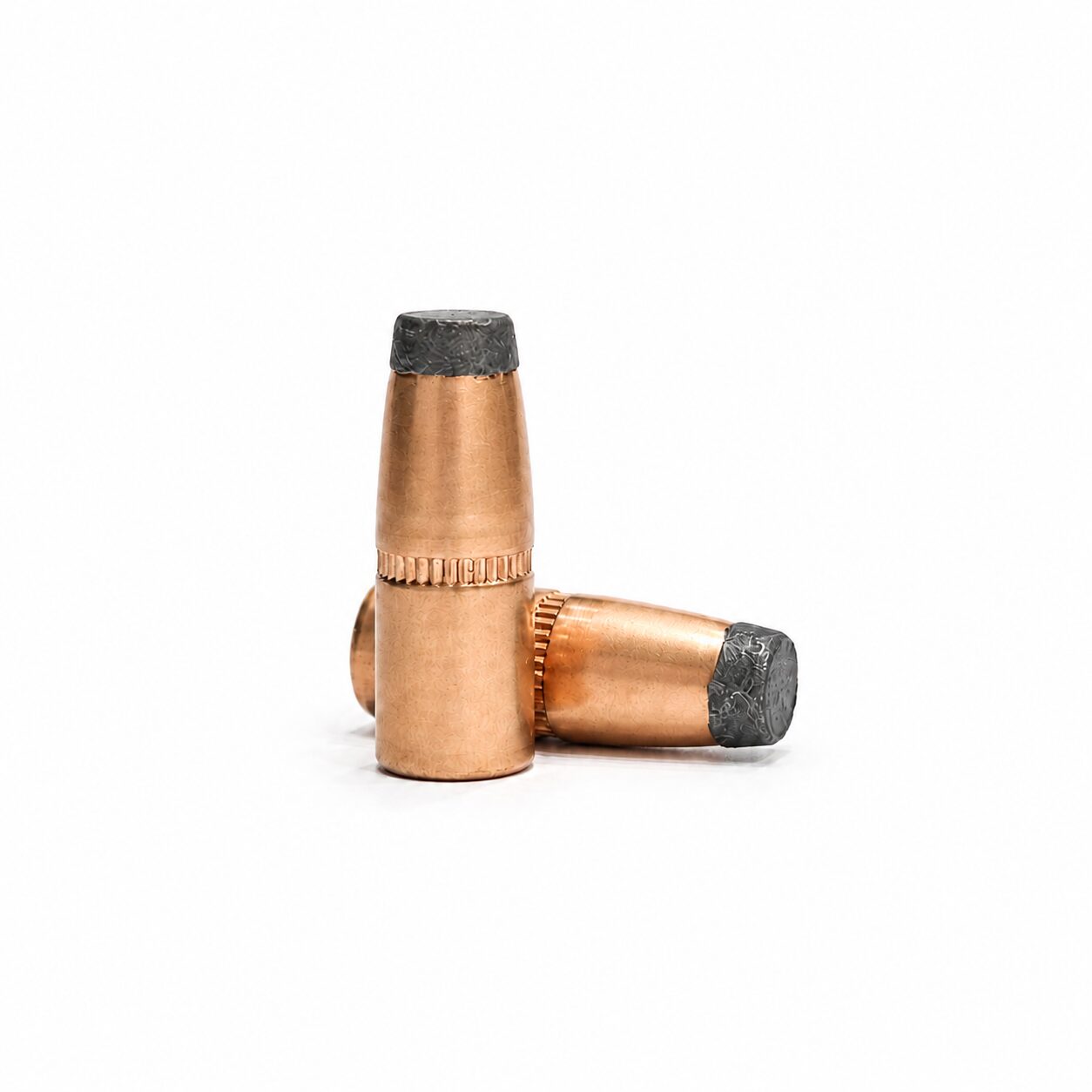
Diameter and weight do not describe the whole bullet. The nose, shank, cannelure or crimp arrangement, overall length in the finished cartridge, and construction can affect whether a component is appropriate for a particular rifle and purpose.
For a lever rifle, a useful component discussion should answer four separate questions:
- Will the finished cartridge comply with authoritative loading data?
- Will it feed and cycle in the specific rifle?
- Is its profile appropriate for the rifle’s magazine system under the manufacturer’s guidance?
- What is known—and not merely intended—about its performance?
The fourth question is often mishandled. A maker can describe why a bullet was designed a certain way. That is design intent. Expansion, penetration, retained weight, accuracy, and field results require their own evidence under stated conditions.
120 grains or 139 grains?
There is no honest universal answer based on weight alone.
Weight can be part of a useful comparison, but the result also depends on bullet construction, length and profile, published loading data, the rifle, actual velocity, feeding, accuracy, impact conditions, and the reader’s intended use.
| Question | Why it matters | What counts as evidence |
|---|---|---|
| Does it fit the platform? | A correct diameter does not guarantee correct feeding or magazine suitability. | Manufacturer guidance, published data, and rifle-specific verification. |
| Does the rifle shoot it consistently? | A theoretical advantage is irrelevant if the rifle does not group or function acceptably. | A documented range test with distance, conditions, shot count, and group method. |
| What velocity does this exact load produce? | Generic velocity ranges do not establish the output of a particular rifle and load. | A published source with conditions or a retained chronograph string. |
| What is the bullet designed to do? | Design intent helps explain the product but does not prove the outcome. | Maker specification, clearly attributed. |
| What has it actually done? | Terminal and field claims require more than adjectives. | Controlled testing or documented field evidence with limitations. |
Gold Country Ammunition currently offers 120- and 139-grain flat-nose component and loaded-ammunition formats. They are useful worked examples because their identity and product records are controlled by the publisher. They should not be treated as proven winners merely because GCA makes them.
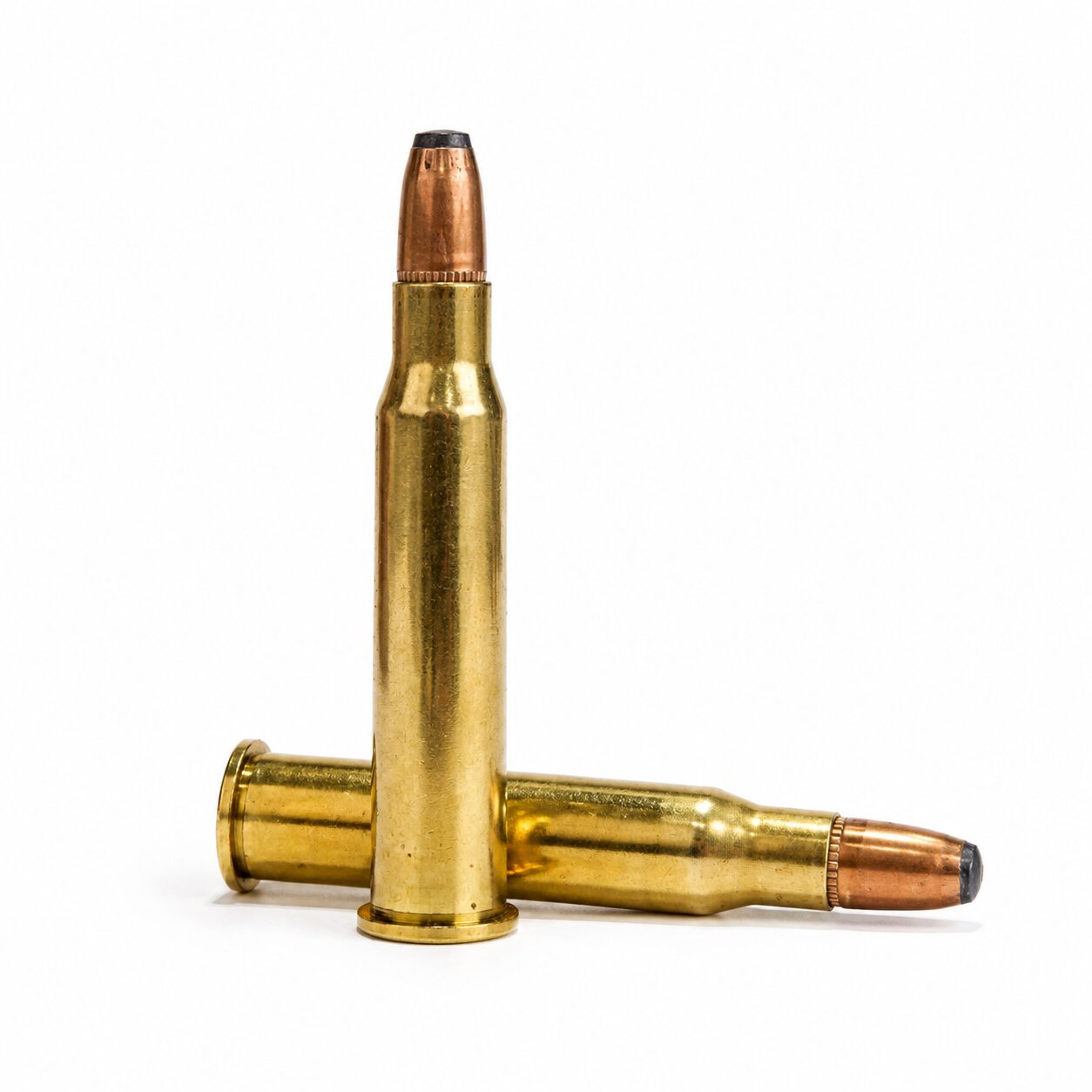
One retained GCA observation reports a 120-grain load at 2,563 feet per second from a 24-inch Winchester 94 AE using iron sights. The original chronograph string, test date, ammunition lot, shot count, conditions, and instrument are not yet attached to the public record. Until that evidence packet is complete, this remains a bounded velocity observation—not a universal velocity or accuracy claim.

What “available” means
“I found a listing” and “I can order the correct ammunition today” are not the same statement.
| Availability state | What it means | What it does not prove |
|---|---|---|
| Historical factory offering | A manufacturer offered the load in a documented period. | That it remains in production or in stock. |
| Cataloged | A current or dated catalog lists the product. | That a retailer or maker can fulfill an order now. |
| Retail listing | A product page exists. | That inventory is real, current, or orderable. |
| In stock | The seller currently reports inventory. | That the status will remain unchanged. |
| Made to order | A specialist accepts an order and produces or fulfills it under stated terms. | Immediate shipment or mass-market distribution. |
| Components available | Cases, bullets, or other components can be obtained. | That loaded ammunition is available or that the reader has safe loading data. |
GCA’s live WooCommerce product records—not this paragraph—control current price, stock, and fulfillment. A permanent guide should explain the market without preserving a stock count that may be wrong tomorrow.
A five-minute verification checklist
Before buying loaded ammunition
- Read the exact chamber marking on the firearm.
- Identify the rifle model and obtain the correct owner’s manual.
- Confirm that the seller’s product is loaded ammunition, not component bullets or empty cases.
- Read the quantity and fulfillment terms.
- Confirm current stock or made-to-order status at the seller’s live record.
- Review applicable shipping, age, and location requirements.
- If caliber identity or firearm condition is uncertain, stop and consult the firearm manufacturer or a qualified gunsmith.
Before buying component bullets
- Confirm the bullet diameter, weight, profile, and exact product identity.
- Distinguish a tubular-magazine lever rifle from a single shot.
- Use current pressure-tested data from an authoritative source.
- Do not substitute components or extrapolate beyond the published data.
- Verify finished-cartridge function safely and according to the firearm and loading-equipment instructions.
- Keep a lot-specific loading and range record.
What this guide does not claim
- That one bullet weight is best in every 7-30 Waters.
- That a design description proves expansion or penetration.
- That one rifle’s velocity applies to another rifle.
- That a visible group proves a measured accuracy result without a test record.
- That a product listing proves current supply.
- That a handload is safe because it appears in an article or forum.
- That a scarce cartridge is inherently better because it is scarce.
Those boundaries are part of the answer. A trusted reference should make it easy to see not only what is known, but how it is known and what remains to be tested.
Primary references
- SAAMI Z299.4, Centerfire Rifle — cartridge and chamber standard.
- Handloader: “Bullets & Brass — 7-30 Waters” — Waters development history and 1984 commercialization.
- Winchester Model 94 owner’s manuals — firearm operation and safety.
- Hodgdon Reloading Data Center — current published loading-data resource.
Last substantive review: October 2, 2026.
Disclosure: Gold Country Ammunition publishes this guide and makes or sells products discussed within it. Product inclusion does not replace the evidence and rifle-specific verification described above.
Continue the path
Go deeper without losing the thread
These reviewed references continue the same question through platform context, technical detail, field evidence and available products.