Gold Country Field Guide
What Bullet Works Best in a 7-30 Waters Lever-Action Rifle?
A rifle-first guide to choosing a .284-inch bullet for the 7-30 Waters. It separates tubular-magazine and single-shot decisions, distinguishes specifications and design intent from observed performance, and gives readers a verification checklist before buying or loading.
A rifle-first guide to choosing a .284-inch bullet for the 7-30 Waters without treating weight, nose shape or maker intent as proof of performance.
What bullet works best in a 7-30 Waters lever-action rifle?
There is no single best bullet for every 7-30 Waters rifle. The useful choice begins with the firearm: how its magazine is loaded, what profiles its manufacturer permits, what overall cartridge length and crimp arrangement the published data requires, and whether the assembled cartridge feeds and chambers correctly in that individual rifle.
Bullet weight matters, but it does not decide safety, feeding, accuracy, expansion or penetration by itself. Construction, dimensions, impact conditions and the rifle all matter too.
Start here: Is the cartridge going into a tubular magazine, a box magazine, or a single-shot firearm? Do not apply a single-shot bullet choice or seating practice to a tubular-magazine rifle without firearm-specific and current pressure-tested guidance.
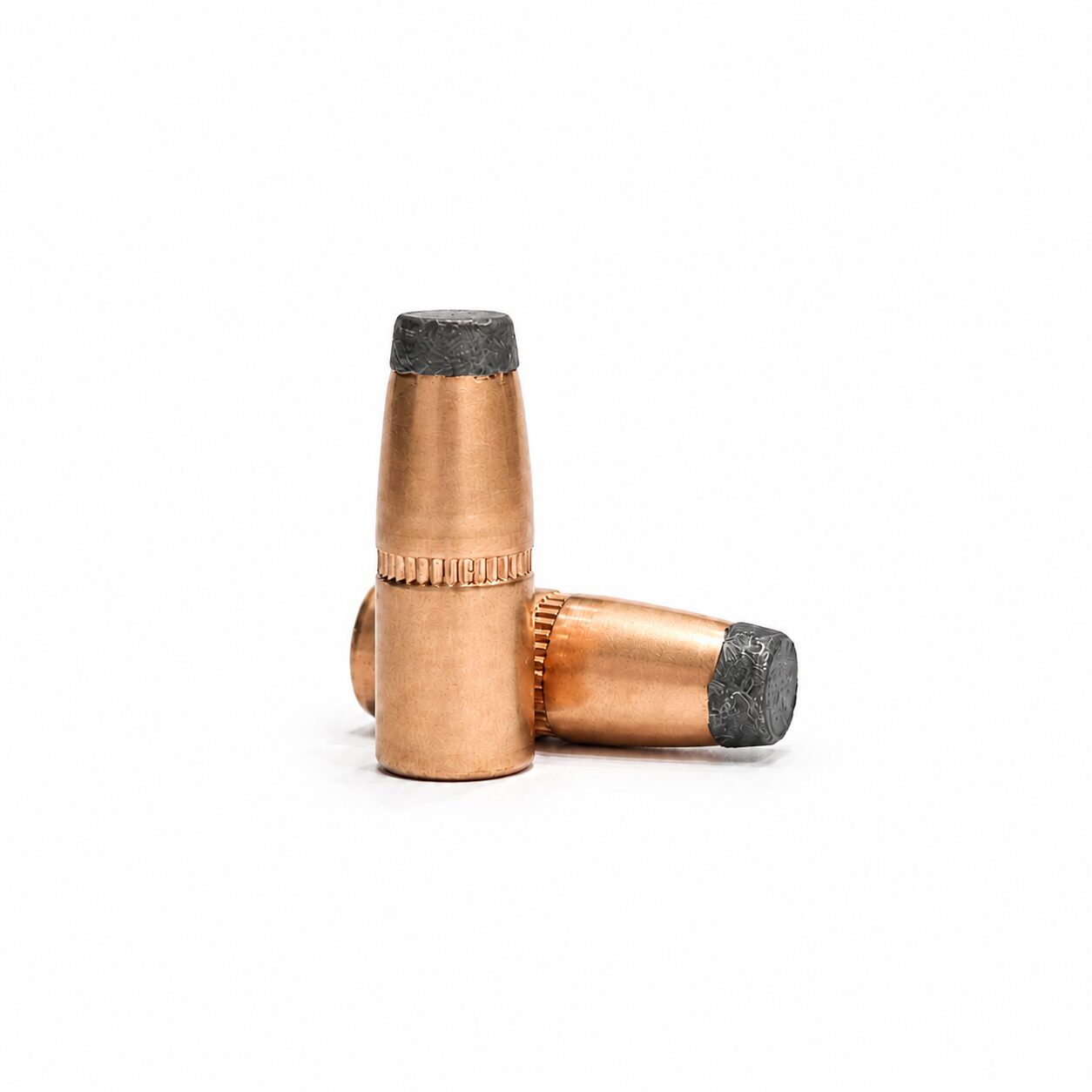
Choose the platform before the bullet
| Firearm and loading path | First question | What must be verified |
|---|---|---|
| Tubular-magazine lever rifle | Is the bullet profile permitted for cartridges carried nose-to-primer in this rifle? | Firearm instructions, bullet profile, loaded length, crimp arrangement, magazine function, feeding and chambering. |
| Lever rifle used as a single loader | Will the cartridge ever enter the magazine? | Do not assume a single-loading practice makes a projectile suitable for magazine use; keep the ammunition clearly separated and follow the firearm maker’s instructions. |
| Single-shot firearm | What does the exact barrel and chamber require? | Current pressure-tested data, bullet dimensions, loaded length, chamber fit and component compatibility. |
| Unknown or modified rifle | Can the chambering and magazine system be positively identified? | Stop. Consult the manufacturer or a qualified gunsmith before selecting or assembling ammunition. |
The Winchester Model 94 manual library is the correct starting point for manufacturer instructions, but the manual must match the rifle generation. A general Model 94 manual is not a substitute for 7-30 Waters loading data.
Six checks that matter more than a “best bullet” label
1. Nose profile
In a tubular magazine, cartridges lie end to end. Use only a bullet and loaded-cartridge configuration supported by the firearm manufacturer’s instructions and authoritative component data. “Flat nose” is a useful description, not a universal safety certification: the exact profile, primer relationship and assembled cartridge still require verification.
2. Cartridge overall length
Overall length can affect magazine fit, feeding and chambering. This guide does not publish a universal seating length because the correct value depends on the exact bullet, case, rifle and current pressure-tested data.
3. Crimp location and case support
A cannelure or crimp groove is a component feature, not a complete loading instruction. Verify the exact component combination and follow a current authoritative data source. Do not improvise charge, seating or crimp specifications from appearance.
4. Feeding and chambering
A cartridge can fit published dimensions yet still require rifle-specific function verification. Feeding and chambering claims should be tied to the exact rifle and ammunition tested—not generalized from one product page or one photograph.
5. Construction
Jacket, core, bonding, hardness and geometry can influence what a bullet does. Weight alone does not prove expansion, retained weight, penetration depth or suitability for a particular animal. Those outcomes require a defined test or adequately documented field evidence.
6. Evidence from the individual rifle
The rifle must place the selected ammunition consistently enough for its intended use. Record the rifle, barrel, sights, ammunition lot, conditions, distance and shot count. Without those details, “accurate,” “reliable” and “best” are impressions rather than reusable evidence.
120 grains and 139 grains: what can be said now
| Worked example | Verified here | Not established by weight or listing alone |
|---|---|---|
| 120-grain .284 Gold Country Rhino flat-nose component bullet | Component format, nominal bullet weight, .284-inch diameter, flat-nose product description and current product identity. | Universal feeding, accuracy, recoil, expansion, penetration or field superiority. |
| 139-grain .284 Gold Country Rhino flat-nose component bullet | Component format, nominal bullet weight, .284-inch diameter, flat-nose product description and current product identity. | Universal feeding, accuracy, retained energy, expansion, penetration or suitability for larger game. |
These are worked examples, not automatic winners. The live WooCommerce records are the authority for the exact current SKU, quantity, specifications, price and availability. The 120- versus 139-grain comparison owns the developing weight-role evidence.
What design intent can—and cannot—tell you
A maker may design a bullet around a cartridge, magazine system or expected velocity range. That intent explains why a feature exists. It does not by itself prove the result in every rifle or at every impact condition.
- Specification: a measurable or documented product fact, such as nominal weight or diameter.
- Design intent: what the maker meant the feature to accomplish.
- Observation: what occurred under stated conditions.
- Comparative conclusion: a result supported by matched evidence rather than adjectives.
The separate penetration guide should be used as a construction-and-evidence question, not as proof that heavier automatically means deeper.
Before buying or loading: a reusable checklist
- Read the exact chamber marking and identify the firearm model.
- Identify whether cartridges will be carried in a tubular magazine or used only in a single-shot system.
- Check the firearm manufacturer’s ammunition and magazine instructions.
- Match the exact bullet SKU—not just weight and diameter—to current authoritative data.
- Verify overall length, crimp arrangement and component compatibility from that data.
- Confirm magazine fit, feeding and chambering with the firearm pointed in a safe direction and handled according to its manual.
- Keep component packaging, lot information and the data source with the loading record.
- Record actual rifle results before making accuracy or performance conclusions.
- If any identity, condition, loading or function question remains unresolved, stop and consult the manufacturer or a qualified gunsmith.
Handloading boundary: This guide intentionally provides no charge weights, seating depth or pressure claims. Use current pressure-tested data applicable to the exact cartridge and components, such as the Hodgdon Reloading Data Center, and follow every component and firearm manufacturer’s instructions.
Continue the decision
- The 7-30 Waters Cartridge Guide — cartridge, platform and evidence hub.
- 120 vs. 139 grains — weight-role comparison and missing-evidence record.
- 7-30 Waters ammunition buyer’s guide — current loaded-ammunition and component paths.
- Penetration guide — construction questions and evidence limits.
References and review record
- The 7-30 Waters Cartridge Guide.
- Handloader: “Bullets & Brass — 7-30 Waters”.
- Winchester Model 94 owner’s manuals.
- Hodgdon Reloading Data Center.
Reviewed: October 2, 2026. Product records remain the authority for changing SKU, quantity, specification, price and availability information.
Disclosure: Gold Country Ammunition publishes this guide and makes or sells the GCA products used as examples. Product inclusion does not purchase or establish a favorable technical conclusion.
Continue the path
Go deeper without losing the thread
These reviewed references continue the same question through platform context, technical detail, field evidence and available products.