Gold Country Field Guide · .44 Magnum
Where to Buy .44 Magnum Rifle Ammunition
Choose among available 240-, 265- and 300-grain Rhino lever-gun loads by the job they need to do—not by bullet weight alone.
Gold Country Ammo offers loaded .44 Magnum rifle ammunition with 240-, 265- and 300-grain Rhino flat-nose bullets in both 20- and 50-round packages. This Guide helps you choose the appropriate role before opening a product page.
The practical choice is not simply “light versus heavy.” Bullet construction, usable velocity, recoil, trajectory, penetration, rifle function and the intended target all matter. A load that fits one rifle and one hunting problem well is not automatically the best choice for every .44 Magnum rifle.
Start with the job the load must do
| If your priority is… | Begin with… | Why |
|---|---|---|
| A versatile hunting or defense load with less bullet weight | 240-grain Rhino | The lightest option in this three-load family and the familiar starting point before moving into heavier bullets. |
| A deliberate middle choice for a rifle or compatible revolver | 265-grain Rhino | More bullet weight than the 240 without going directly to the 300-grain load. |
| A heavy wide-flat-nose load for penetration-focused work | 300-grain Rhino | The heaviest member of the family. Choose it because the intended job calls for its construction and weight—not merely because 300 is the largest number. |
This table is a starting point, not a substitute for confirming firearm compatibility. Review the ammunition product specifications and your firearm manufacturer’s requirements before ordering or firing any load.
240-grain Rhino: the familiar starting point
The 240-grain Rhino load is the first place to look when you want a flat-nose .44 Magnum hunting or defense load without stepping into the heavier 265- or 300-grain choices.
240-grain Rhino rifle ammunition · 20 or 50 rounds
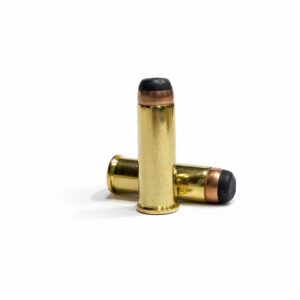
265-grain Rhino: the balanced middle
The 265-grain Rhino exists for shooters whose answer is not automatically 240 or 300 grains. It preserves a distinct middle position in bullet weight while keeping the cartridge-specific flat-nose role GCA built this family around.
265-grain Rhino rifle ammunition · 20 or 50 rounds
300-grain Rhino: the heavy penetration-focused choice
The 300-grain Rhino is the heavy wide-flat-nose member of this family. It is the place to begin when the intended use calls for the heavier bullet and its penetration-focused role, subject to the specifications and compatibility of the individual firearm.
300-grain Rhino rifle ammunition · 20 or 50 rounds
Should I buy 20 or 50 rounds?
The package size does not change which bullet is right for the job. Choose 20 rounds when you are testing an unfamiliar load, checking function in a particular rifle or purchasing for a limited, defined need. Choose 50 rounds when you already know the load fits the firearm and want enough ammunition for confirmation, practice and field use.
Before relying on any load, confirm feeding, chambering, extraction, accuracy and point of impact in the firearm in which it will be used. A product listing cannot make those rifle-specific checks for you.
Why rifle use changes the decision
A .44 Magnum cartridge fired from a lever-action rifle is not merely a revolver cartridge in a longer barrel. The platform changes the velocity context, while magazine geometry and feeding make bullet profile and overall cartridge dimensions part of the decision.
GCA’s .44 Magnum Lever-Gun Ammunition & Bullet Selection Guide explains the full 240-versus-265-versus-300 framework. The Truth About .44 Magnum Performance in Lever-Action Rifles explains why barrel length alone does not tell the whole story. If deer hunting is the specific question, continue to Best .44 Magnum Ammo for Deer Hunting before choosing a product.
The useful buying sequence
- Name the firearm and verify what ammunition it is designed to use.
- Name the actual job: hunting conditions, likely range and the terminal result required.
- Compare 240, 265 and 300 grains by role—not by bullet weight alone.
- Review the exact product specifications and current availability.
- Buy 20 rounds to evaluate an unfamiliar load or 50 rounds when the fit is already established.
- Confirm function and point of impact before relying on the ammunition in the field.
Ready to choose?
If you already know the role, open the matching 240-, 265- or 300-grain product above. If you are still deciding, use the complete 240-, 265- and 300-grain selection Guide first. The right next step is the answer your rifle and intended use require—not a generic recommendation to buy the heaviest load.
Use the live product page as the authority for current price, availability, package quantity and fulfillment timing.
Continue the path These reviewed references continue the same question through platform context, technical detail, field evidence and available products.Go deeper without losing the thread