Gold Country Field Guide · Model 1894
.44 Magnum Lever-Gun Ammunition & Bullet Selection
Choose 240, 265 or 300 grains by the job your rifle needs to do—not by a generic caliber chart.
The practical question is not simply, “What is the best .44 Magnum bullet?” It is, “What should this ammunition do in my rifle?”
A .44 Magnum lever rifle gives the cartridge a different job than a revolver. The longer barrel can change velocity and terminal behavior, while the tubular magazine, carrier and chamber place their own demands on bullet shape, cartridge length and crimp. This guide compares Gold Country Ammo’s 240-, 265- and 300-grain Rhino flat-nose bullets and matching rifle ammunition.
Quick selection: 240 vs. 265 vs. 300 grains
| Weight | Best starting point for | What distinguishes it |
|---|---|---|
| 240 grains | General-purpose rifle hunting and broad rifle/revolver crossover | The most familiar weight in this comparison and a practical starting point below the heavy-for-caliber options. |
| 265 grains | Balanced lever-rifle hunting performance | More mass than 240 grains without going all the way to 300—the middle-ground Rhino. |
| 300 grains | Heavy-for-caliber hunting and penetration-focused woods use | The deliberate heavy-bullet choice, with corresponding changes in recoil, trajectory and compatibility. |
There is no universally ideal weight. Rifle dimensions, sights, expected distance, game, recoil tolerance and the desired balance between trajectory and penetration all matter. Confirm function and point of impact in the firearm that will actually be used.
240 vs. 300 Grain .44 Magnum in a Lever Rifle: What Actually Changes?
If you are comparing a conventional 240-grain load with a 300-grain load, bullet weight is only the visible difference. The useful comparison also includes bullet construction, loaded velocity, cartridge length, rifle function, recoil, trajectory and the job you expect the bullet to do.
A 240-grain load is the more familiar starting point. A 300-grain load is a deliberate heavy-for-caliber choice. Neither is automatically better, and weight alone does not tell you whether a bullet will expand, hold together or penetrate farther.
| Question | 240-grain starting point | 300-grain starting point |
|---|---|---|
| Why choose it? | You want the familiar .44 Magnum weight class and broad rifle/revolver crossover where the exact load fits both firearms. | You are intentionally choosing a heavy bullet for a penetration-focused rifle role. |
| Velocity and trajectory | A lighter bullet is often loaded faster within a comparable product family, which can reduce trajectory arc over ordinary lever-rifle distances. Verify the actual load rather than assuming. | A heavy bullet is commonly launched more slowly and normally requires more attention to trajectory, zero and distance. Use the actual ammunition data. |
| Recoil and recovery | Often the easier place to begin, but recoil still depends on the complete load and rifle. | Can produce a different recoil impulse and slower recovery. Confirm it in the rifle rather than judging from bullet weight alone. |
| Firearm compatibility | Usually the more familiar cartridge configuration, but feeding, crimp and point of impact still require verification. | Cartridge length, nose profile, crimp location, carrier geometry and revolver cylinder length deserve closer attention. Not every firearm handles every heavy-bullet configuration equally. |
| Terminal role | Construction and impact conditions determine the result. A 240-grain hollow point, soft point and Rhino flat nose are not interchangeable merely because they weigh the same. | Greater mass does not guarantee a particular result. The 300-grain Rhino is a wide-flat-nose, structural-integrity design rather than a promise of universal expansion or penetration. |
| Best reason to select it | Familiarity, practical crossover and a less specialized starting point. | A defined heavy-for-caliber purpose that justifies the additional recoil, trajectory and compatibility work. |
If the 240-grain load is PPU—or any other factory load
Start with the exact product, not the brand name alone. Determine the bullet’s actual construction and nose profile, the manufacturer’s published velocity and test-barrel context, whether the ammunition is intended and dimensioned for the rifle, how it feeds from the magazine and carrier, where it prints relative to the rifle’s current zero, and whether its intended terminal role matches the game, distance and shot conditions.
That comparison is more useful than treating every 240-grain factory load as one category and every 300-grain load as another.
Where 265 grains fits
The comparison names the two endpoints, but the middle option matters. The 265-grain Rhino exists for the shooter who wants more mass than the familiar 240-grain class without adopting the full 300-grain heavy-bullet configuration. Choose 265 grains because that middle role fits the rifle and intended use—not because an average bullet weight is automatically a safe compromise.
The practical decision
Begin with 240 grains when you want the more familiar configuration and do not have a defined reason to move heavier. Choose 300 grains when the intended job specifically calls for a heavy, wide-flat-nose bullet and you are prepared to verify function, recoil, zero and trajectory. Use 265 grains when the balanced middle is the actual requirement.
Whatever weight you select, confirm the exact ammunition in the exact rifle before carrying it afield.
Why .44 Magnum feels different in a rifle
- Velocity can change. A longer barrel can produce substantially different velocity than a handgun, but the gain depends on the ammunition and firearm.
- Terminal behavior can change. A bullet developed around handgun impact speeds may behave differently when launched from a rifle.
- Practical range and sighting change. A shoulder-fired platform can make precise placement easier and changes how shooters evaluate trajectory and zero.
- Feeding becomes part of bullet selection. Nose profile, cartridge overall length, crimp location and the individual rifle’s carrier geometry matter.
- The tubular magazine matters. Use ammunition and bullet profiles appropriate for the firearm, and follow the rifle manufacturer’s instructions.
Federal introduced HammerDown as ammunition optimized and packaged for lever-action rifles, including cartridges such as .44 Magnum that were traditionally presented as handgun cartridges. Sierra likewise publishes separate .44 Magnum rifle data.
Rifle-first does not mean rifle-only
Many shooters value .44 Magnum precisely because a lever rifle and revolver can share ammunition. Gold Country’s rifle-first presentation identifies the underserved use case; it does not dismiss handgun hunters or revolver owners.
Our product pages identify compatible-revolver use where appropriate. Before using any heavy or long-profile load in a handgun, confirm cylinder length, cartridge fit, firearm condition and the manufacturer’s ammunition guidance. The 300-grain class deserves particular attention because not every .44 Magnum firearm handles every heavy-bullet configuration equally.
Why flat-nose geometry matters
The Rhino is a jacketed, exposed-lead flat-nose bullet built around structural integrity rather than rapid hollow-point expansion. In a lever-rifle application, the broad meplat gives the bullet a clear job: apply force immediately while preserving a direct penetration path.
A flat nose also avoids treating a handgun-style hollow point as the default answer for every rifle load. Flexible-tip ammunition is a legitimate tube-magazine solution when the ammunition and firearm are designed for it, but it is not the only useful lever-gun approach.
Choosing by intended outcome
Choose 240 grains when:
- You want the most familiar weight in this Rhino rifle family.
- You want broad crossover potential between compatible rifles and revolvers.
- You prefer to begin below the heavy-for-caliber 265- and 300-grain options.
Choose 265 grains when:
- You want the middle of the Rhino lineup rather than either endpoint.
- Your priority is a balanced rifle-hunting load with more mass than 240 grains.
- You want a distinctive lever-gun bullet weight poorly represented in ordinary component inventories.
Choose 300 grains when:
- You are intentionally selecting a heavy-for-caliber bullet.
- Penetration-focused hunting or woods use takes priority over the flattest possible trajectory.
- You are prepared to verify firearm compatibility, recoil, function and point of impact.
Component bullets or loaded ammunition?
Choose component bullets when you handload and want to tune a cartridge to your rifle using appropriate published jacketed-bullet data. Gold Country Rhino component bullets are sold in boxes of 50.
Choose loaded ammunition when you want a finished Gold Country rifle load without sourcing scarce flat-nose components. Current Rhino rifle ammunition is offered in 20- and 50-round packages and is made to order, normally shipping within seven business days.
Shop the Rhino rifle family
Every card below is connected to its WooCommerce product. Price, availability, title, image and destination update from the store rather than being copied into this guide.
240-grain Rhino · Familiar and versatile
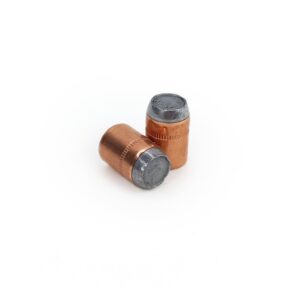
Component bullets
.429 Rhino 240-Grain Flat-Nose Bullets for .44 Magnum and .444 Marlin — 50 Count
View product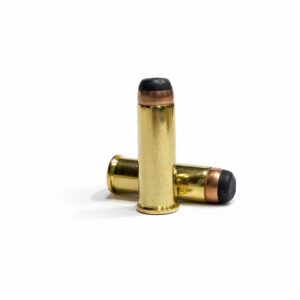
Loaded ammunition
.44 Magnum Rifle Hunting Ammunition — 240-Grain Gold Country Rhino Flat Nose, 20 Rounds
View product Loaded ammunition
.44 Magnum Rifle Hunting Ammunition — 240-Grain Gold Country Rhino Flat Nose, 50 Rounds
View product265-grain Rhino · The balanced middle
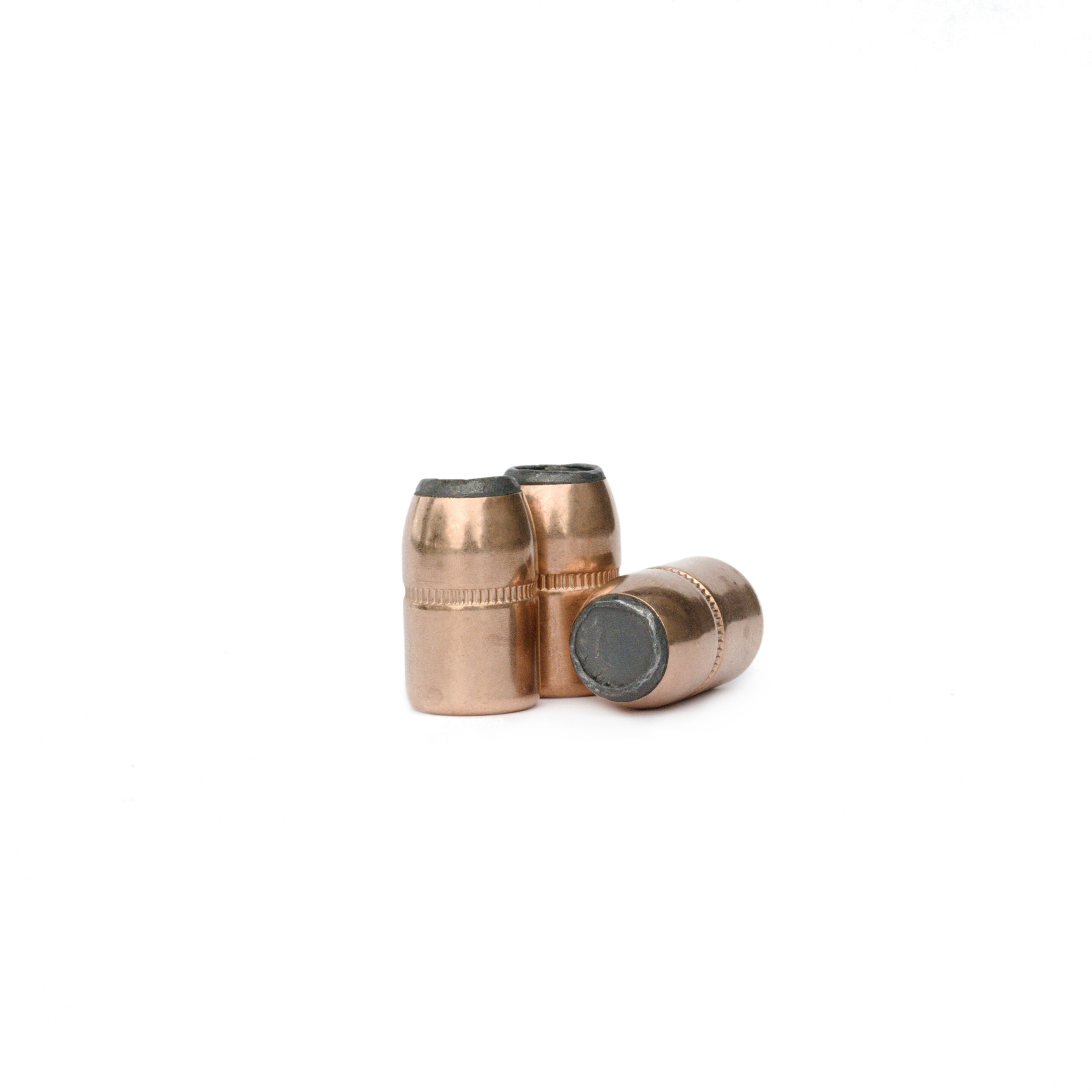
Component bullets
.429 Rhino 265-Grain Flat-Nose Bullets for .44 Magnum Rifles and .444 Marlin — 50 Count
View product Loaded ammunition
.44 Magnum Rifle Hunting Ammunition — 265-Grain Gold Country Rhino Flat Nose, 20 Rounds
View product Loaded ammunition
.44 Magnum Rifle Hunting Ammunition — 265-Grain Gold Country Rhino Flat Nose, 50 Rounds
View product300-grain Rhino · Heavy for caliber
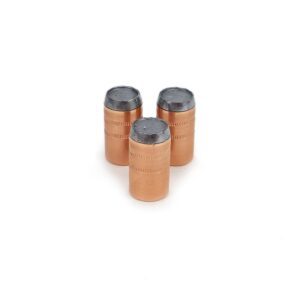
Component bullets
.429 Rhino 300-Grain Wide Flat-Nose Bullets for Heavy .44-Caliber Loads — 50 Count
View product Loaded ammunition
Gold Country .44 Magnum Rifle Bear & Heavy-Game Ammunition — 300gr Jacketed Rhino Flat Nose — 20 Rounds
View product Loaded ammunition
.44 Magnum Heavy Hunting & Bear Ammunition — 300-Grain Gold Country Rhino Wide Flat Nose, 50 Rounds
View productSafe selection and verification
- Use only the correct cartridge in a firearm marked for that cartridge.
- Follow the firearm manufacturer’s instructions and warnings.
- Confirm cartridge fit and reliable feeding before field use.
- Do not assume load data for one bullet or cartridge is interchangeable with another.
- Use current published jacketed-bullet data exactly as directed by its publisher.
- Confirm zero and point of impact with the exact ammunition carried afield.
Continue the Model 1894 path
Technical references and further reading
- Federal Premium — HammerDown Ammunition Optimized for Lever-Action Rifles
- Sierra — .44 Magnum Rifle Data
- Marlin — Model 1894 Owner’s Manual
- Gold Country Ammo — Lever-Gun Bullet Geometry Technical Note
- Model 1894 Shooter’s Lever-Action Journal — Issue No. 1
- Platform-Tuned Load Development — Marlin 1894 SBL, .44 Magnum
This guide is a selection framework, not load data. Product availability, firearm dimensions and individual rifle behavior must be verified for the specific application.
Continue the path These reviewed references continue the same question through platform context, technical detail, field evidence and available products.Go deeper without losing the thread