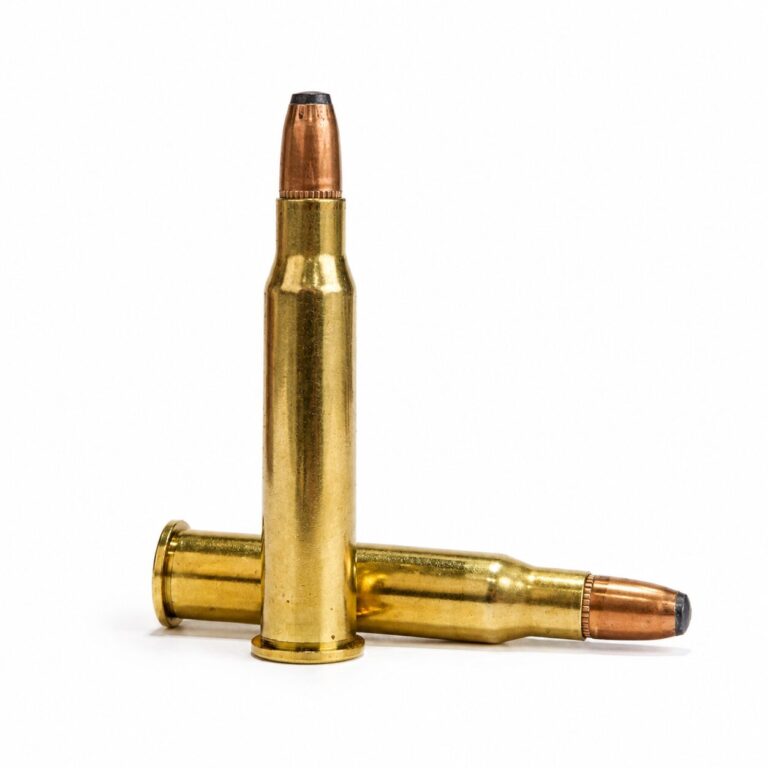
Sectional Density in a Tubular World
The 7-30 Waters was designed to be efficient. It succeeded.
Opening Feature
The Efficient Lever Evolution
When Ken Waters began exploring what would become the 7-30 Waters, he wasn’t chasing velocity. He was solving a geometry problem.
The lever-action rifle, especially in tubular magazine configuration, imposed real constraints: flat or round nose bullets, modest pressure ceilings, and limited overall length. Within those constraints, the .30-30 Winchester reigned supreme — but it carried a known limitation: trajectory.
The solution was not to increase case capacity dramatically. Nor was it to attempt magnum performance inside a lever action. The solution was efficiency.
By necking the .30-30 case down to 7mm, the cartridge gained access to higher sectional density bullets without increasing recoil or exceeding lever-friendly pressure windows. The result was improved downrange behavior without abandoning the platform’s mechanical limits.
The 7-30 Waters is not louder than the .30-30. It is not dramatically faster. It is not radically different in case design.
What it is — is more efficient.
Secondary Feature
The Quiet Cartridge
Modern cartridge development often follows a predictable pattern: more speed, more energy, more numbers.
The 7-30 never followed that script.
Its operating window sits comfortably in moderate velocity bands. Push it too hard and you gain little while risking pressure creep in actions not designed for excess.
Its identity is tied to balance:
- Manageable recoil
- Improved trajectory inside realistic woods distances
- Efficient powder burn
- Controlled expansion within impact velocity windows
The 7-30’s restraint is not weakness. It is design discipline.
Field Case — Tools Used For This Article
The tools listed below were selected as representative platforms used to ground the analysis, ballistic modeling, and system behavior discussed in this article. Selection is based on manufacturing specifications, production consistency, long-term user reports, documented performance characteristics, and publicly available technical data. These tools were not limited to a single test rifle or controlled range session.
- Rifle: Model 94 Angle eject XTR 7-30 Waters 24″ barrel 1:10 twist
- Open Iron Sights:
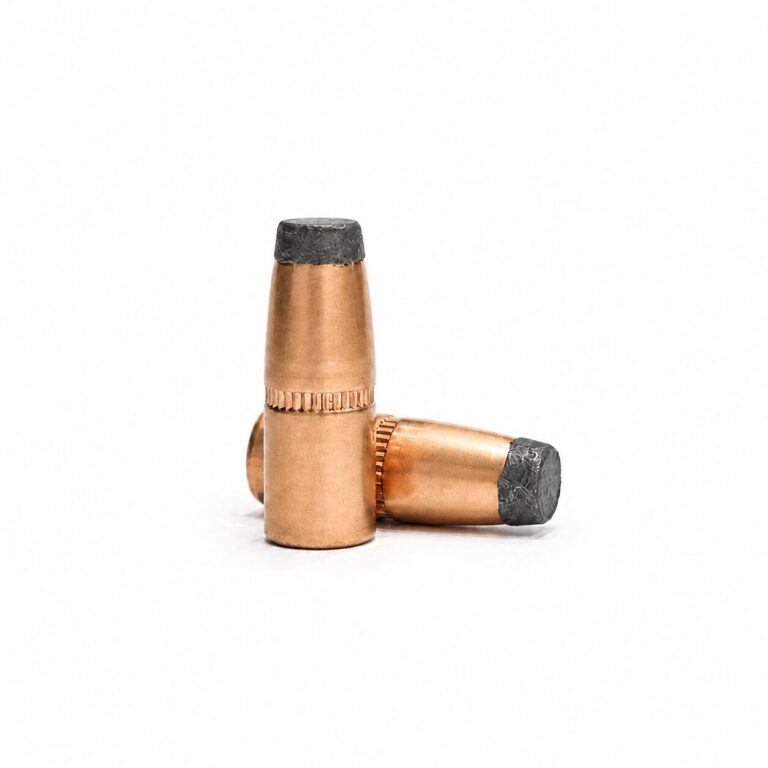
- Bullet 1: Gold Country Rhino 7-30 Waters — 120 Grain .284 Flat-Nose Bullets
- Bullet 2: Gold Country Rhino · 139 Grain .284 Rounded Flat-Nose Bullets Rapid Expansion
- Load Data: See 7-30 Waters Cartridge Load Data:
- Spotting Scope: Cronus UHD Gen2 (20–60×86mm APO Clarity) — The Detail-Hunter’s Spotter for Serious Shooters.
- Chronograph: Athlon Rangecraft Velocity Pro Radar Chronograph — Doppler radar, bluetooth enabled, velocities 65–5000 FPS.
- Recording: Weather-resistant notebook & pencil for immediate entries; later transcribed into Shooter’s Edge logs.
Ballistics Bench
The 7-30 Velocity Window
A look at structured load data shows a consistent pattern:
The cartridge operates in a narrow but useful velocity band — typically high 2,000s depending on barrel length and bullet weight.
Shorter barrels shave velocity, but the cartridge’s efficiency minimizes dramatic loss. Longer barrels do not suddenly transform it into a high-speed outlier.
This stability across barrel lengths reinforces its design intent:
It was built for predictable performance — not extreme performance.
Attempting to “magnum-ize” the 7-30 misses its purpose. The gain is marginal. The cost is mechanical stress and diminishing return.
Field Trials
Woods Distance Reality
Inside 300 yards — where most lever rifles realistically operate — the 7-30 performs with quiet authority.
Recoil remains mild.
Follow-up shots are fast.
Trajectory holds flatter than traditional .30 caliber options of similar case origin.
More importantly, bullet behavior at impact velocity remains controlled when paired with appropriate construction.
The 7-30 is not a long-range hero.
It is a woods cartridge with extended confidence.
Build of the Month
The Modernized Model 94
A 20-inch barrel remains the sweet spot for balance and velocity retention.
Optics should be lightweight and low magnification — 1–4x or 2–7x maintains the rifle’s natural handling qualities.
This cartridge thrives in rifles that preserve balance. Overweight optics and heavy modifications undermine the efficiency philosophy it was built around.
The 7-30 works best when the rifle remains true to intent.
Terminal Performance
Sectional Density vs Frontal Diameter
Where traditional .30 caliber lever bullets rely on frontal mass, the 7-30 leverages penetration geometry.
A 139-grain 7mm bullet carries greater sectional density than many classic 150-grain .30 caliber projectiles.
That doesn’t mean it hits harder.
It means it penetrates differently.
Within moderate impact velocities, this difference becomes meaningful — especially on medium game where controlled expansion and straight-line penetration matter more than dramatic frontal disruption.
Departments
Practical Notes & Stability Observations
- Twist rates vary; longer bullets demand attention to stability margins.
- Bullet length matters more than weight alone.
- Tubular magazine geometry limits profile experimentation.
- Seating depth adjustments can influence feeding reliability.
These are not glamorous details. They are the difference between theory and function.
Referenced in:
Closing Argument
Why Efficiency Still Matters
The 7-30 Waters faded not because it failed — but because other cartridges captured attention through louder marketing.
Efficiency rarely wins marketing battles.
But engineering discipline does not disappear simply because it is quiet.
The 7-30 remains a study in intelligent compromise:
- Improved trajectory without excess recoil
- Penetration geometry without magnum pressure
- Lever compatibility without mechanical strain
In a world increasingly obsessed with velocity extremes, the 7-30 reminds us that balance still matters.
Reader Invitation & Submission Standards
6.5 Creedmoor Field Journal exists for one reason:
To separate noise from understanding.
If you’ve read this issue and found clarity, we invite you to participate — not with opinion alone, but with observation.
We are not building a comment thread.
We are building a reference archive.
What We Welcome
We welcome field-based contributions that include:
- Documented barrel length
- Twist rate
- Bullet used (including manufacturer and model)
- Measured muzzle velocity
- Environmental conditions (temperature, elevation)
- Distance at which performance was evaluated
- Observed behavior (group shape, vertical dispersion, terminal notes)
Real data builds durable knowledge.
What We Do Not Publish
We do not publish:
- Unverified claims
- Anonymous anecdote without context
- Internet-sourced repetition
- “It should work” conclusions without testing
- Emotion-driven rebuttals
6.5 Creedmoor Field Journal is not a debate arena.
It is a documentation space.
Why Standards Matter
Precision shooting rewards clarity.
Clarity requires structure.
Structure requires discipline.
If a claim cannot be supported with measured velocity, environmental context, and bullet specification, it becomes noise — and noise is what this publication was created to filter.
Submission Format
If you would like your field observations considered for publication, include:
- Rifle specification (barrel length, twist)
- Cartridge and bullet (exact model and weight)
- Chronographed velocity (average, SD if available)
- Shooting conditions (temperature, altitude)
- Distance tested
- Observed results
Clear, concise, measurable.
We will review submissions for inclusion in future Departments sections or Field Trials features.
Submit a Field Log
If you keep records, you already belong here. Honest misses teach as much as clean hits. Submit the log with the conditions and outcome—no embellishment required.
Coming Next in 7-30 Waters Field Journal
Issue No. 2 Lever Action Pressure & Modern Bullet Construction
The 7-30 Waters operates inside narrow mechanical margins — and not every 7mm bullet belongs in a tubular rifle.
In Issue No. 2, we examine:
- Pressure ceilings in lever actions
- Case head realities and action strength
- Why bolt-gun data does not translate
- Bullet construction differences at moderate impact velocity
- When modern jacket designs exceed the cartridge’s original design window
Efficiency is not only about velocity.
It is about restraint.
Issue No. 2 explores the discipline required to preserve what makes the 7-30 Waters work.
Further Reading & Technical Notes
For deeper source-based reference, see the 6.5 Creedmoor Compendiums and Technical Notes index.
WARNING: