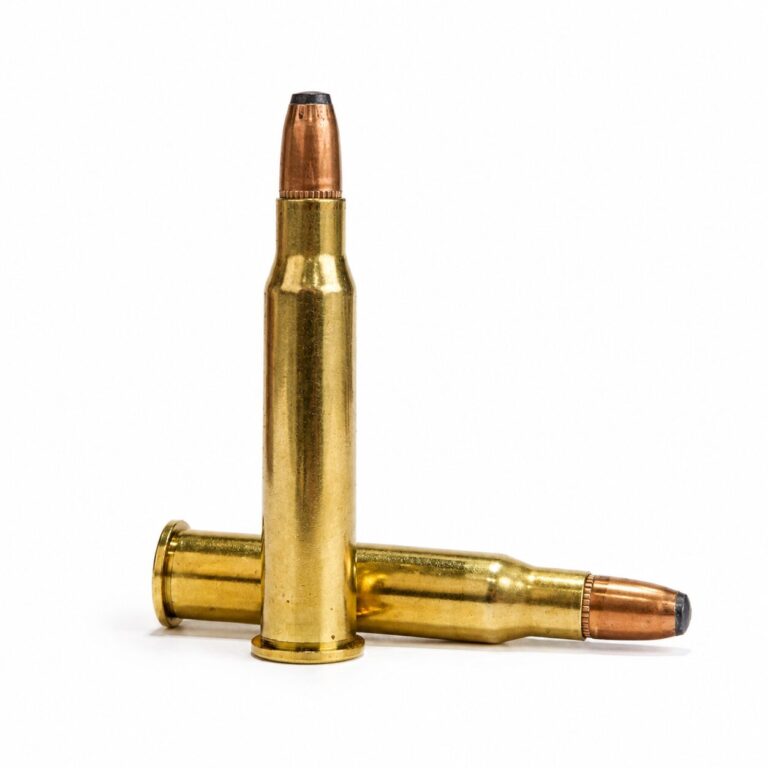
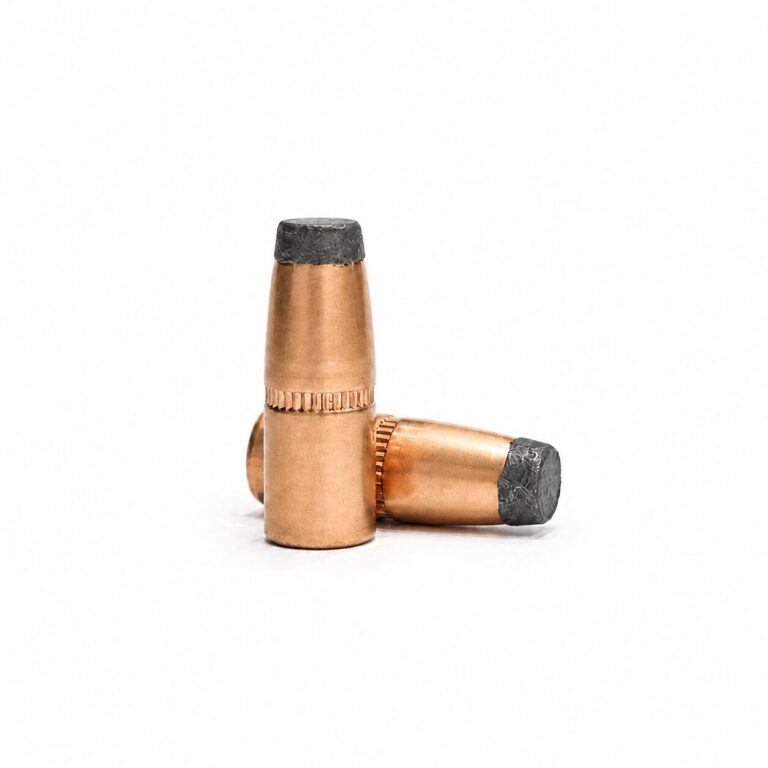
Legacy Foundations, Modern Efficiency & Magnum Authority


The 7mm bore did not become successful because of one cartridge.

It became successful because it adapted.

Across more than a century, the 7mm diameter has appeared in rifles built for:

• Military service
• European mountain hunting
• North American big game
• Western open-country shooting
• Modern long-range platforms

To understand the 7mm ecosystem, you must first understand that it is not a single system.

It is a family.

And that family divides naturally into three groups.


I. Legacy 7mm Cartridges

Moderate Velocity, Practical Authority

These cartridges established the 7mm reputation.

Most notable:

7×57 Mauser
7-30 Waters

These cartridges share several characteristics:

• Moderate velocity envelopes
• Long service history
• Often traditional barrel twist rates
• Proven field performance

They were not designed for extreme velocity.

They were designed for reliability and penetration.

The 7×57 Mauser, introduced in the late 19th century, demonstrated early that a smaller-diameter bullet with strong sectional density could outperform heavier, wider bullets in penetration and reach.

These cartridges reward:

• 139–140 grain traditional bullets
• 160 grain classic hunting profiles
• 175 grain round nose or moderate-length designs

They are efficient, not extreme.

They perform best when bullet geometry matches their velocity window.


II. Modern Efficiency Cartridges

Balanced Performance Without Excess

The second family represents evolution rather than reinvention.

Notable members:

7mm-08 Remington
• .280 Remington
.280 Ackley Improved

These cartridges refined the 7mm concept for modern rifle platforms.

They offer:

• Improved case efficiency
• Strong velocity without excessive recoil
• Broad bullet weight compatibility
• Compatibility with short and long action rifles

This group represents the practical center of the 7mm world.

They comfortably handle:

• 120 grain for light recoil applications
• 139–140 grain as the standard
• 160–175 grain for extended distance and larger game

These cartridges do not rely on magnum velocity to perform.

Referenced in:

TN-7MM-03 — Bullet Length vs Weight — Why 7mm Stability Is Geometry-Driven

(7mm / .284) 120 Grain Class Guide

The 140 Grain Class Deep Dive

(7mm / .284) 160-165 Grain Class Guide

(7mm / .284) 175 Grain Class Guide

7-30 Waters Cartridge Guide

7×57 Mauser Cartridge Guide

They rely on balance.

They are often the most versatile in the 7mm ecosystem.


III. Magnum 7mm Platforms

Retained Velocity & Extended Reach

The magnum family elevated the 7mm bore into long-range prominence.

Key examples:

• 7mm Remington Magnum
• 7mm SAUM
• 7mm WSM

These cartridges increase velocity significantly.

That increase changes the performance window.

Magnums:

• Extend effective range
• Increase retained energy
• Demand careful bullet construction
• Expand stability margins at distance

But velocity alone does not define them.

Magnums reward:

• 160–175 grain bullets
• High-BC designs
• Controlled expansion profiles

They are not simply “faster.”

They are extended-envelope systems.

See (7mm / .284) 160-165 Grain Class Guide and (7mm / .284) 175 Grain Class Guide


IV. The Overlap Between Families

While these families are distinct, they are not isolated.

A 139-grain bullet may work in:

• 7×57
• 7mm-08
• 7mm Remington Magnum

But it will not behave identically in each.

Velocity window changes expansion behavior.

Twist rate influences stability margin.

Sectional density influences penetration.

This is why cartridge-specific guidance matters.

The 7mm bore is adaptable — but not interchangeable without context.


V. Why Understanding Families Matters

When shooters treat all 7mm cartridges as identical, they risk:

• Over-penetration in moderate systems
• Under-expansion in magnum systems
• Stability issues in legacy rifles
• Missed efficiency advantages

Understanding cartridge family helps answer:

• Which weight class fits best
• Which bullet profile is appropriate
• Which stability considerations apply
• Which velocity window governs performance

This compendium separates the 7mm ecosystem into logical structure so that each cartridge can be evaluated within its intended performance envelope.


VI. Setting the Stage for Cartridge-Specific Guides

With the family structure defined, we can now evaluate individual cartridges with clarity.

Each cartridge-specific guide will examine:

• Typical twist rate
• Practical velocity envelope
• Optimal weight classes
• Stability considerations
• Appropriate bullet geometry

The goal is not to generalize.

The goal is to align bullet choice with cartridge architecture.

Because in the 7mm world, architecture determines outcome.