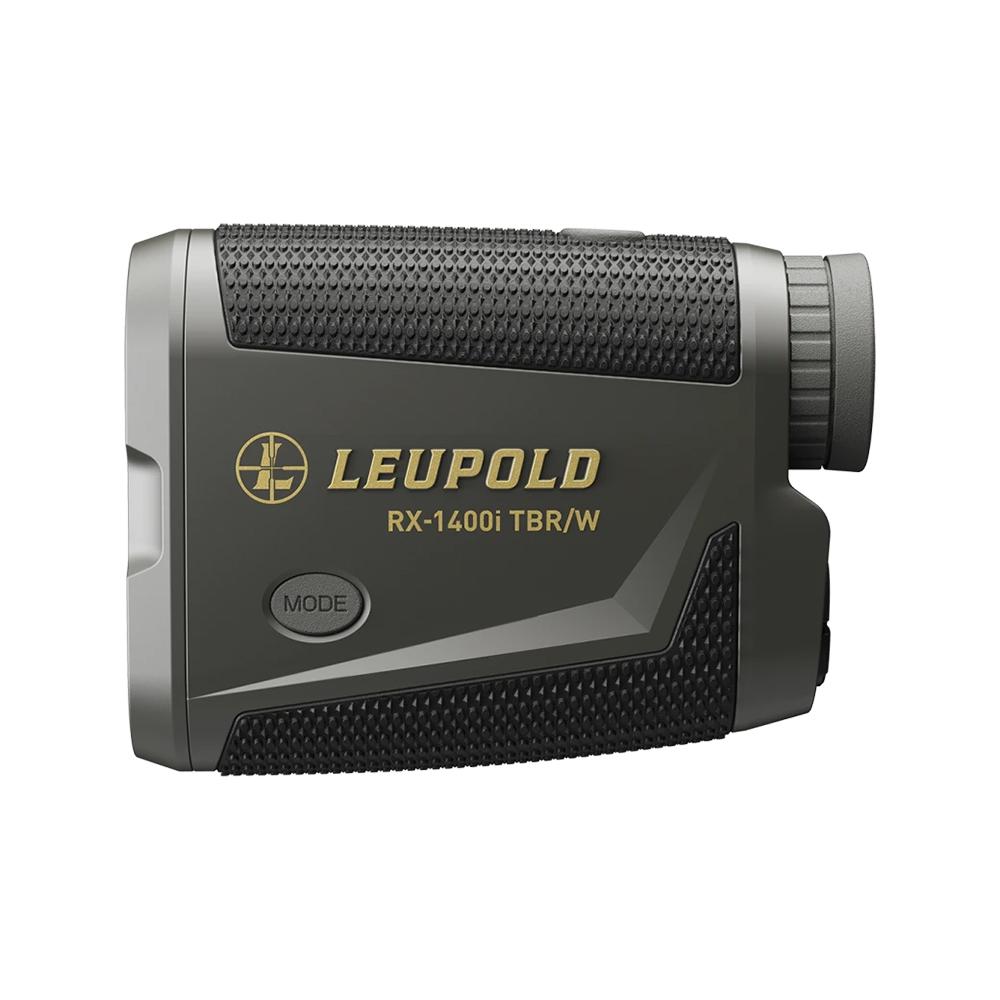
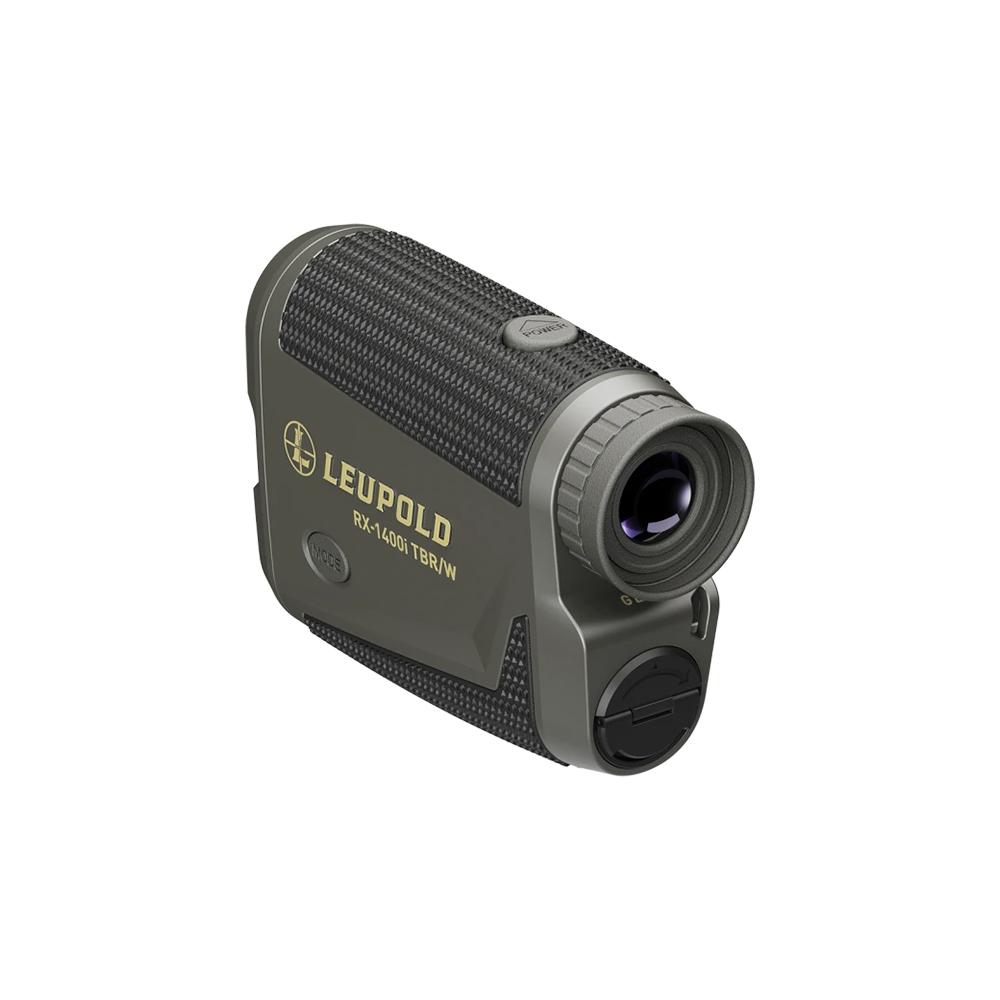
Description
Distance alone doesn’t solve a shot.
Angle, wind, and trajectory do.
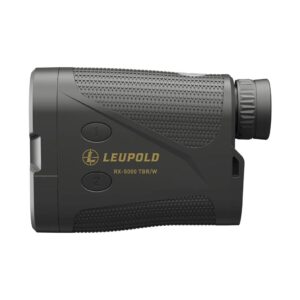
The Leupold RX-1400i TBR/W Gen 2 occupies the middle ground between basic line-of-sight rangefinders and full ballistic computers. It’s built for shooters and hunters who need corrected distance and usable holds, but who don’t want to stop and build a firing solution every time terrain gets complicated.
At its core is Leupold’s DNA laser engine, capable of ranging reflective targets out to 1,400 yards and real-world game animals well beyond typical ethical shooting distances. What separates the RX-1400i from entry-level units is what it does after the range is acquired.
True Ballistic Range / Wind (TBR/W) converts line-of-sight distance into a ballistically meaningful number, accounting for incline, decline, and gravity’s effect on the projectile. For rifle shooters, the unit can display corrected distance and wind holds for a 10-mph full-value wind, presented in MOA, MIL, inches, or centimeters. For archers, Flightpath technology adds an entirely different layer—visually indicating the apex of the arrow’s flight so intervening brush or limbs can be evaluated before committing to the shot.
The bright red TOLED display remains readable in low light and variable conditions, while selectable reticles allow the shooter to tailor the visual presentation to task and environment. Compact, lightweight, and fast, the RX-1400i is designed to be consulted quickly—then put away—so attention stays on the shot, not the device.
This is not a novelty rangefinder.
It’s a decision-support tool for angled terrain, real wind, and time-limited shooting windows.
Technical Scope
This rangefinder is optimized for short- to mid-range rifle and archery use where angle-corrected distance, wind-aware holds, and trajectory clearance materially affect shot outcomes. It is especially relevant in broken terrain, elevated shooting positions, and wooded environments where line-of-sight distance alone is insufficient for ethical or repeatable shot placement.
Specifications
-
Manufacturer: Leupold
-
Model: RX-1400i TBR/W Gen 2
-
Optics Type: Laser Rangefinder Monocular
-
Magnification: 5×
-
Objective Lens: 21 mm
-
Field of View: 368 ft @ 1,000 yds (7°)
-
Eye Relief: 18.3 mm
-
Diopter Adjustment: ±3
-
Max Range (Reflective): 1,400 yds
-
Max Range (Trees): 1,200 yds
-
Max Range (Deer-Sized Target): 900 yds
-
Display: Red TOLED, adjustable brightness
-
Ballistic Functions:
-
Line of Sight (LOS)
-
True Ballistic Range / Wind (TBR/W)
-
Wind holds for 10-mph full-value wind
-
MOA / MIL / inch / centimeter output
-
-
Archery Functions:
-
Bow Mode
-
Flightpath trajectory visualization
-
-
Targeting Modes: Last Target Mode
-
Battery: CR2
-
Battery Life: 3,000+ hours
-
Weatherproofing: Fogproof
-
Weight: 5.1 oz
-
Length: 4″
-
Tripod Adaptable: No
-
Color: Black
-
Country of Origin: Assembled in the USA
-
Condition: New
Relevant Technical Notes
Model 1894 — Rifle Compendium
-
Chapter 23 — Carbine vs. Rifle: Mechanical, Historical & Collectible Differences
Why LOS distance breaks down in real terrain for short-range carbines. -
Chapter 25 — Short Rifles & Trappers
Relevance of compact rifles and angled shots in brush and timber.
Model 1894 — Technical Notes
-
TN-05 — Bore, Twist & Caliber-Specific Behavior
Why corrected distance matters when velocity and drop change quickly. -
TN-09 — Winchester Sight Families (1894–1965)
Iron-sight limitations that drive the need for corrected ranging.
Model 1895 — Rifle Platform Compendium
-
Chapter 6 — Recoil Transmission & Platform Ergonomics
Shooter interface effects on practical hold and shot execution. -
Chapter 8 — Field Use & Hunting Applications
Real-world shooting scenarios where angle correction applies.
6.5 Creedmoor — Rifle Compendium
-
Chapter 7 — Optics Pairing and Long-Range Dope
Angle-corrected distance vs. raw LOS in modern rifle use.
6.5 Creedmoor — Technical Notes
-
TN-19 — Zero Philosophy (100 vs 200 yd)
Why corrected range output must match zeroing strategy. -
TN-20 — Reticle Usage & Holdover Strategy
Wind holds and corrected distance as first-order inputs.

 WARNING:
Reviews
There are no reviews yet.