Description
Why the .30-30 Still Exists
The .30-30 Winchester was never designed to win arguments on paper.
It was designed to work in the places people actually hunt — broken ground, timber, brush, and uneven terrain where shots present themselves briefly and angles are rarely ideal. It is a cartridge built around human scale: fast mounting, quick sight acquisition, manageable recoil, and decisive performance inside realistic distances.
More than a century later, those conditions have not changed.
That is why the .30-30 still matters.
Why Bullet Weight Matters in the .30-30 Platform
Within the .30-30’s operating window, momentum and direction matter more than raw velocity. Over time, the cartridge converged on bullet weights that balance penetration, controllability, and repeatable outcomes.
The 150–170 grain range persisted not by tradition, but by necessity.
Bullets in this weight class:
-
carry sufficient mass to maintain direction through resistance
-
remain stable at practical .30-30 velocities
-
manage recoil without disrupting follow-up shots
-
align naturally with tubular-magazine lever-action rifles
This is not optimization for charts — it is optimization for real use.
Why This Ammunition Exists for the .30-30
Gold Country Rhino .30-30 Winchester ammunition exists to respect the platform, not modernize it into something it was never meant to be.
This load operates squarely inside the .30-30’s natural velocity range and pairs it with a bullet geometry that prioritizes straight-line penetration, directional stability, and predictable behavior when resistance is encountered.
It does not rely on expansion mechanisms, tip designs, or velocity-dependent effects. Its performance comes from geometry, mass, and structural integrity.
This is ammunition built for the way the .30-30 is actually carried and used.
Wide Flat-Nose Geometry — Direction Over Drama
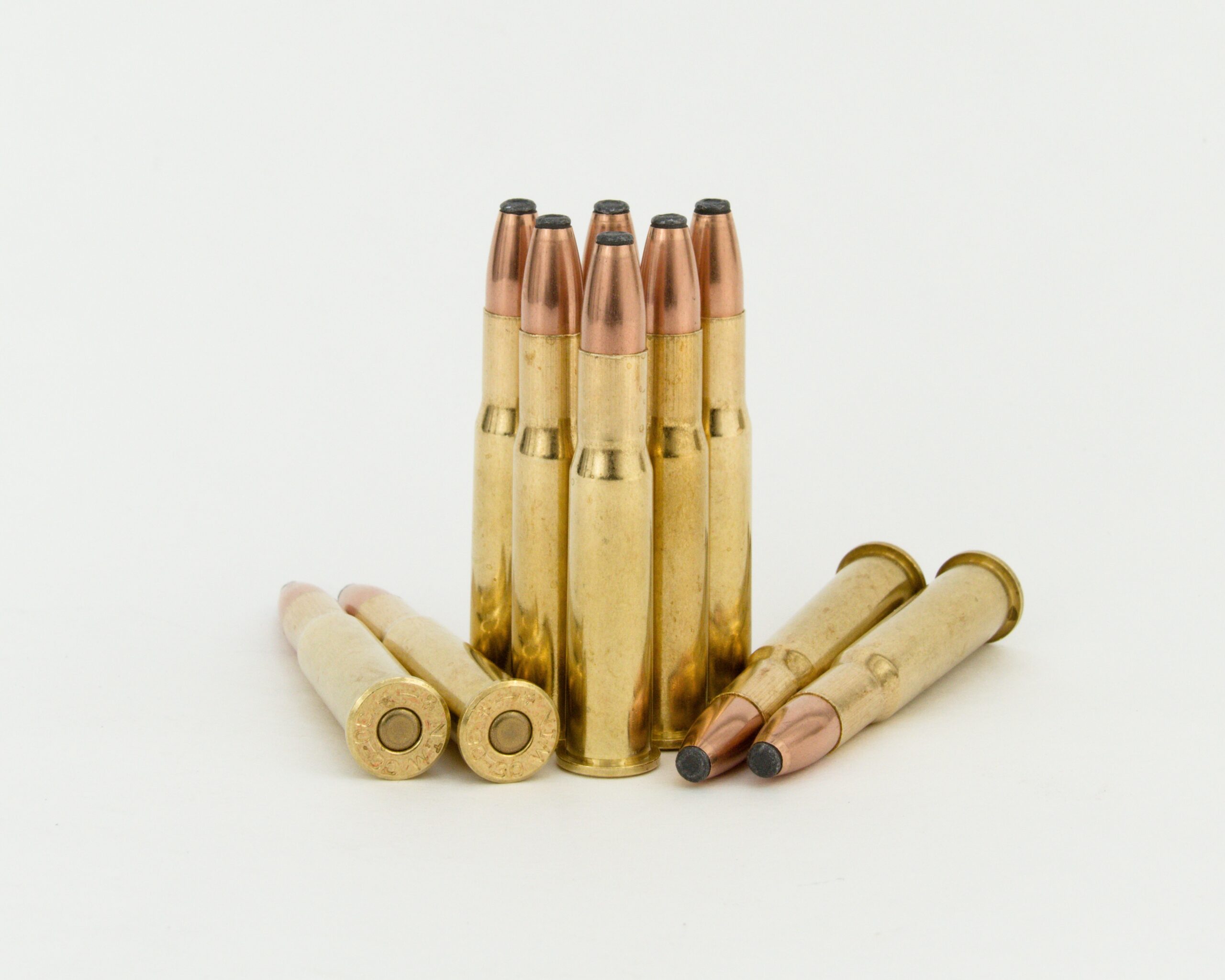
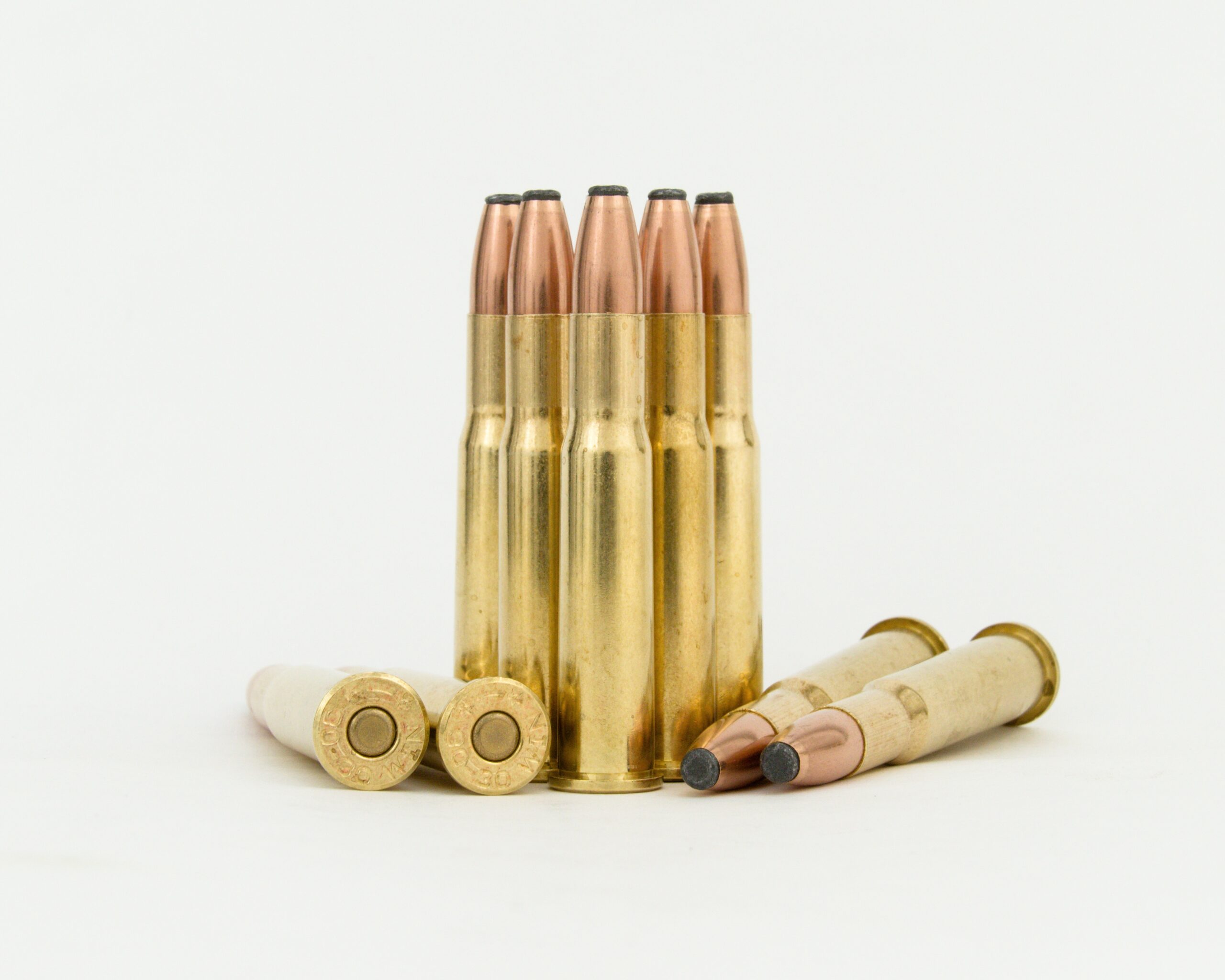
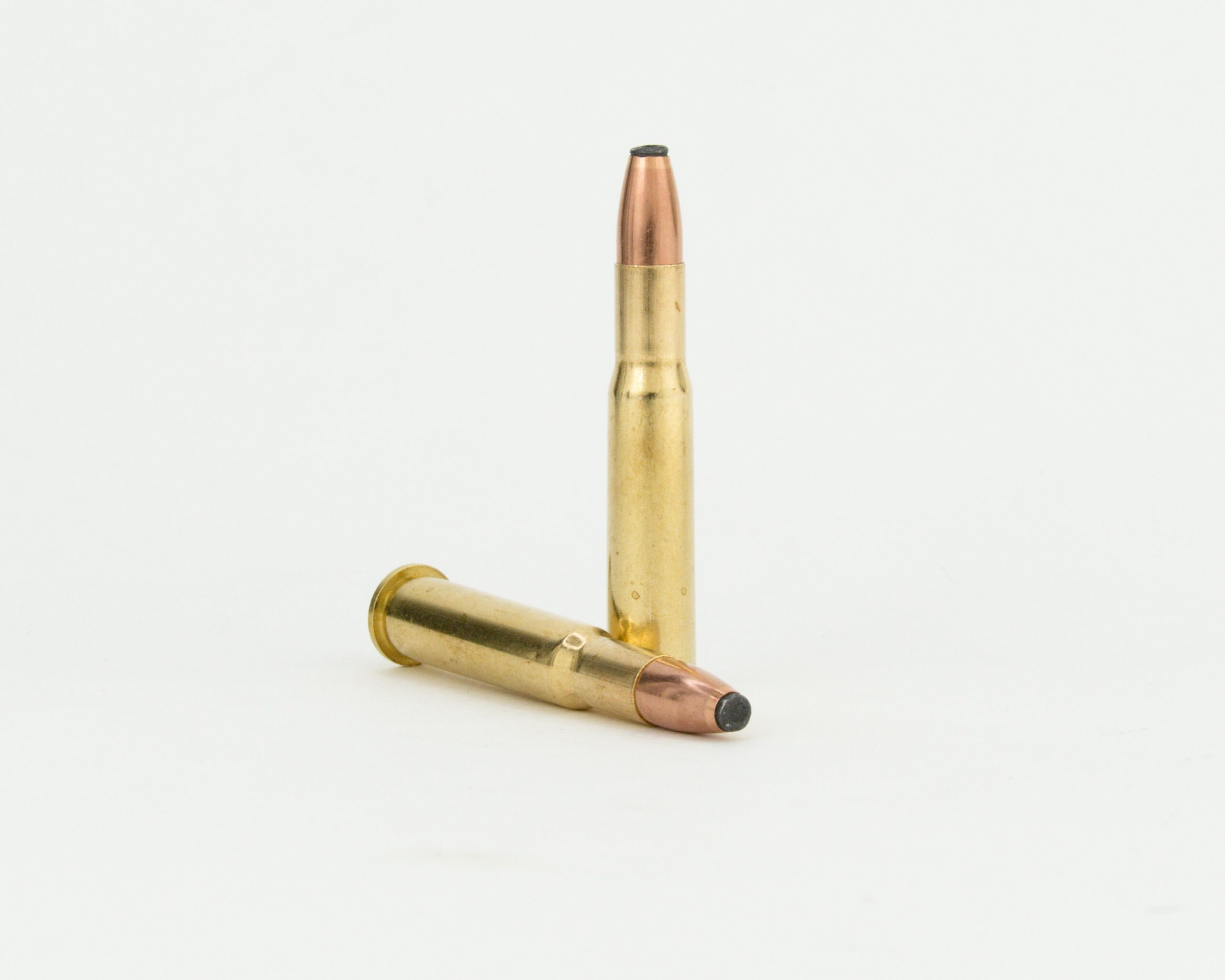
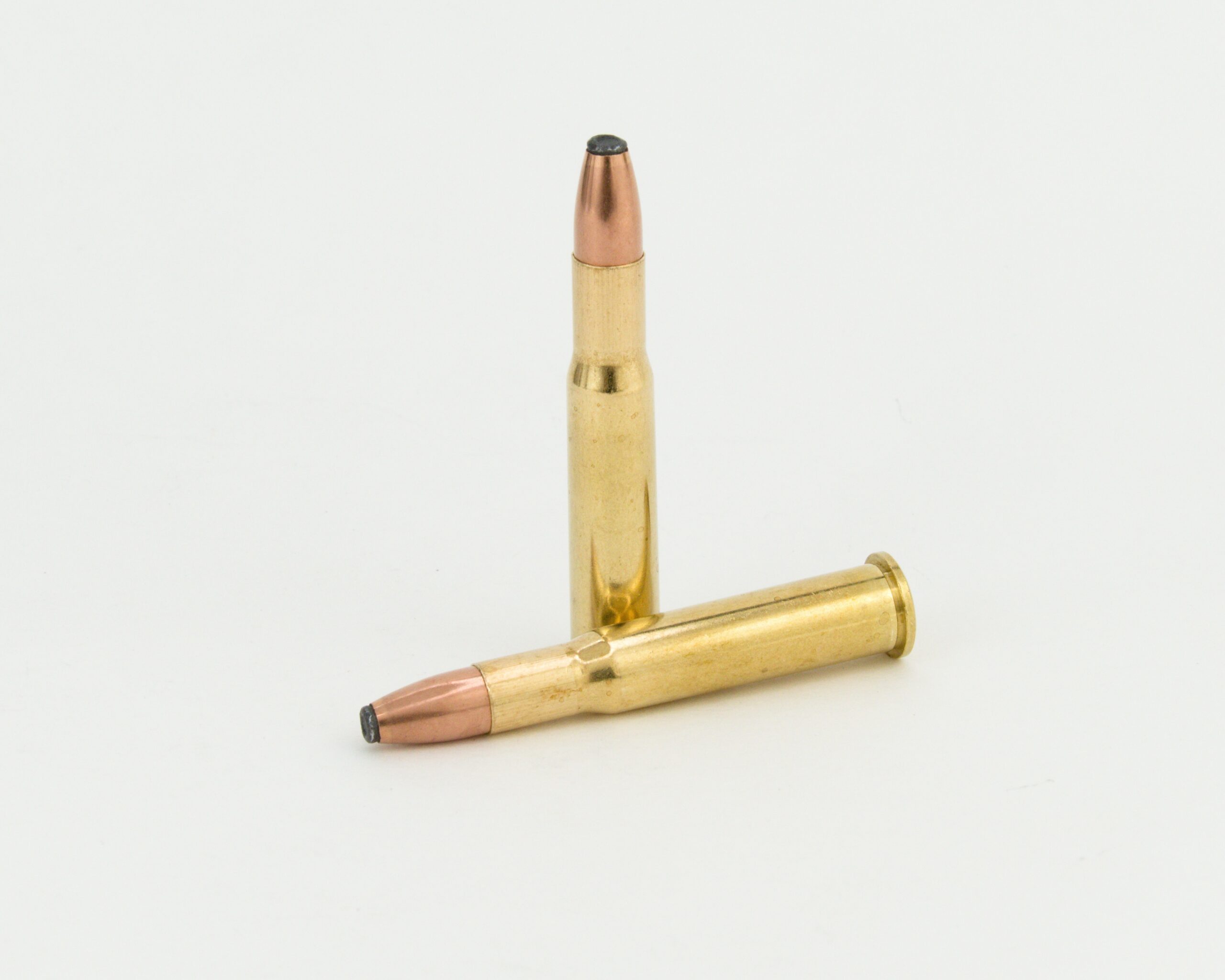
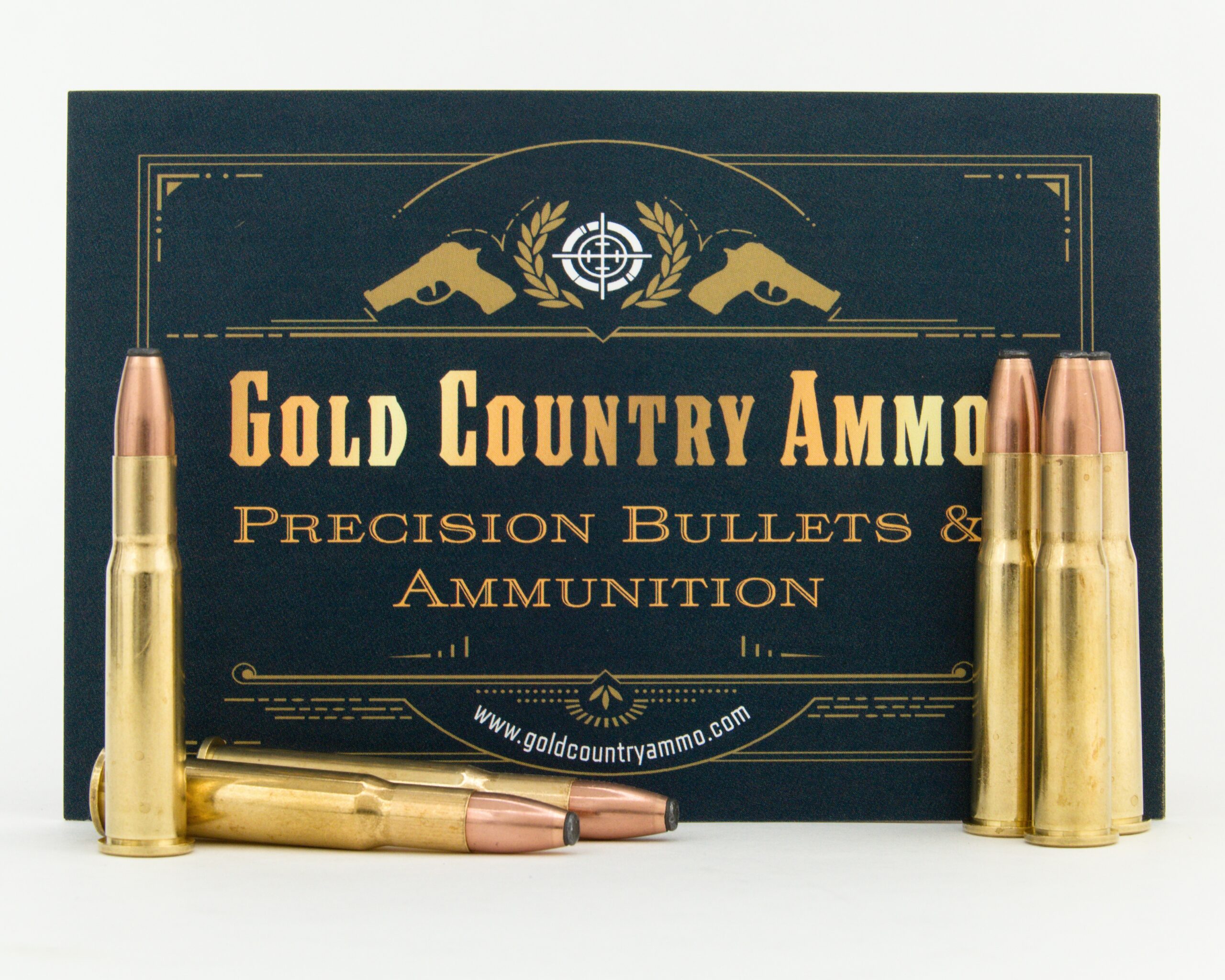
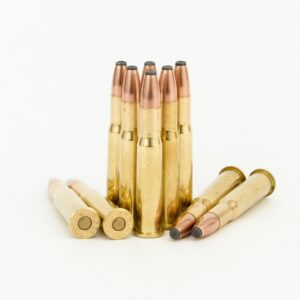
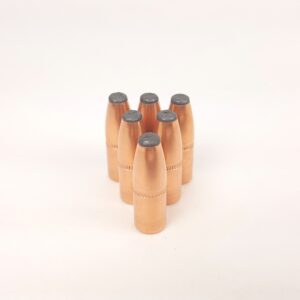
The defining feature of the Gold Country Rhino bullet is its wide flat nose with exposed lead, supported by a reinforced jacket.
This geometry:
-
applies force immediately on impact
-
resists deflection when encountering bone or dense tissue
-
stabilizes penetration direction
-
performs consistently across realistic impact velocities
The exposed lead nose is not intended to expand. It exists to transfer force forward while preserving shape, maintaining direction rather than reshaping itself on contact.
Structural Integrity at Working Velocities
This .30-30 Winchester load produces an approximate muzzle velocity of 1,991 FPS, placing it firmly within the Rhino’s intended operating envelope.
At these velocities, the Rhino bullet architecture is designed to:
-
resist premature deformation
-
maintain mass through resistance
-
continue advancing in a straight line
Actual terminal behavior will always depend on impact conditions, but the Rhino system is engineered to reduce uncertainty, not amplify variability.
Flat Base and Cannelure — Repeatability Where It Counts
A flat-base design favors stability and predictable behavior, while a properly placed cannelure allows for:
-
secure crimping
-
consistent seating depth
-
resistance to setback under recoil
These features support reliable feeding and repeatable performance in lever-action rifles with tubular magazines — the environment the .30-30 was built for.
Hand-Swaged Construction — Mechanical Certainty
Every Gold Country Rhino bullet is hand swaged, not mass poured.
This process ensures:
-
uniform jacket concentricity
-
consistent core placement
-
repeatable weight and balance
The result is ammunition built for shooters who value mechanical certainty over cosmetic results.
Where This Ammunition Fits
Gold Country Rhino .30-30 Winchester ammunition is intended for:
-
close and intermediate-distance shots
-
tight angles and imperfect presentations
-
brushy, treed, and broken terrain
-
fast target acquisition where timing matters
It is ammunition for people who move through country, not sit above it.
System Support and Reference
This ammunition is supported by Gold Country Ammo compendiums, technical notes, platform documentation, and related ammunition offerings, and is referenced within:
-
Gold Country Ammunition Systems
-
Gold Country Bullet Systems
It exists not as an isolated product, but as part of a documented system that explains why it works, where it fits, and where its limits are.
Referenced In
Related Guides & Technical Notes
- .30-30 Winchester — Lever-Gun Bullet Selection & Platform Guide
- Lever-Gun Platforms — Bullet Selection, Safety & Mechanical Reality
- Lever-Gun Fundamentals — Geometry, Safety & Feeding Reality
Additional platform-specific technical notes and compendium chapters apply
Notes (Internal Consistency Reminder)
-
Velocity values are based on published load data and may vary by barrel length, chamber dimensions, and environmental conditions.
-
This listing intentionally avoids expansion claims and velocity-driven marketing language in favor of outcome-based performance description.
Specifications
- Manufacturer: Gold Country Ammo
- Cartridge: .30-30 Winchester
- Bullet: 170-Grain Gold Country Rhino Flat-Nose
- Bullet Construction: Lead core, copper jacket, hand-swaged
- Case: New Starline brass
- Muzzle Velocity: ~1,991 FPS (based on published load data)
- Packaging: 20-round Gold Country box
- Intended Platforms: Lever-action rifles with tubular magazines
- Intended Use: Hunting (small and medium game: Mule deer, Whitetail, Black-tail, other)
- Manufactured In: USA
Does not ship to New York City, Massachusetts, Alaska or Hawaii. FPID, FPOD required for New Jersey, Connecticut and Illinois residents.
New York and California residents must have ammunition shipped to a licensed FFL dealer or ammunition dealer for transfer.

 WARNING:
Reviews
There are no reviews yet.