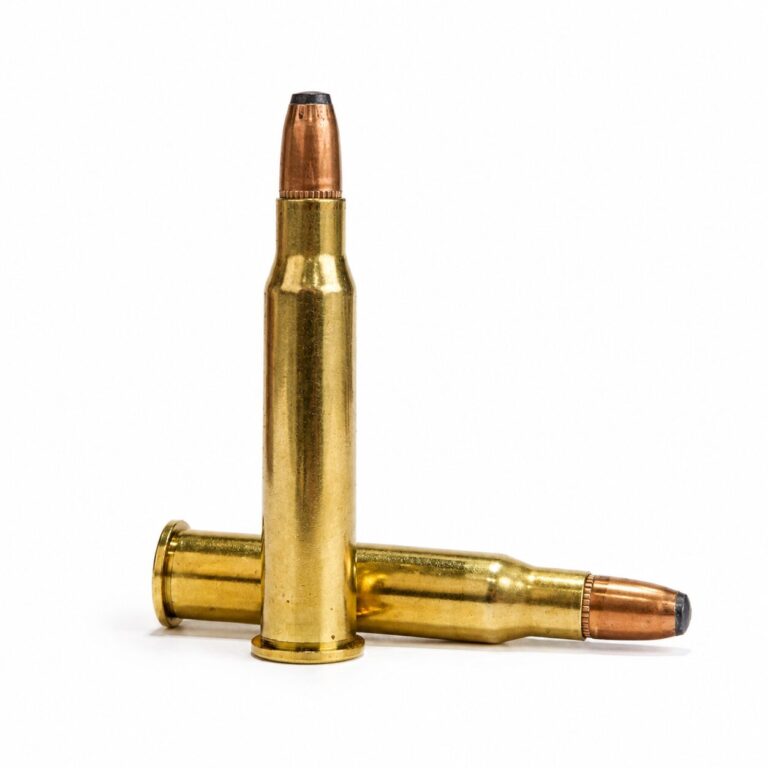
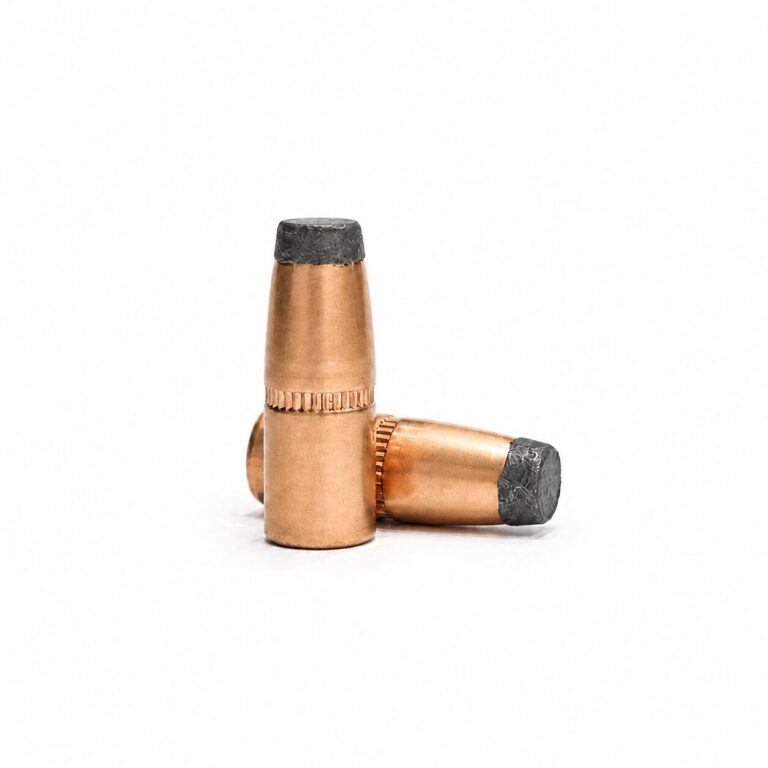
It’s Not Just About Safety — It’s About Function, Feeding, and Real Performance
Most people have heard the basic rule:
“Use flat-nose bullets in a .30-30 because of the tubular magazine.”
That’s true — but it’s only part of the story.
Flat-nose bullet design isn’t just a safety requirement. It’s a functional requirement that affects:
- feeding reliability
- pressure behavior
- terminal performance
Understanding why changes how you choose bullets — and how your rifle performs in the field.
The Safety Factor Everyone Talks About
In a tubular magazine, cartridges are stacked nose-to-primer.
Under recoil:
- each bullet rests against the primer of the cartridge in front of it
- a pointed bullet can act like a firing pin
This creates a real risk of:
- accidental primer ignition
- chain detonation in the magazine
Flat-nose bullets prevent this by:
- distributing force over a wider surface
- eliminating a concentrated point of impact
But Safety Is Only the Beginning
Even if safety weren’t a concern, flat-nose bullets would still be required for another reason:
Lever-action rifles depend on consistent geometry to function reliably.
Feeding Reliability in Lever Guns
The Model 1894 and similar lever-action systems are designed around:
- cartridge length
- bullet profile
- nose shape
Flat-nose bullets provide:
- smooth transition from magazine to chamber
- consistent alignment during feeding
- reduced risk of jams or misfeeds
Pointed or improperly shaped bullets can:
- hang up during cycling
- feed inconsistently
- disrupt timing of the action
The Mechanical System Most People Ignore
The .30-30 is not just a cartridge — it is part of a closed mechanical system.
That system includes:
- magazine design
- feed ramp geometry
- action timing
Flat-nose bullets are not an accessory to that system.
They are part of it.
How Bullet Shape Affects Performance
Flat-nose bullets also influence what happens on impact.
Compared to pointed bullets, they:
- begin transferring energy sooner
- create wider initial wound channels
- are less dependent on high velocity to initiate effect
This is especially important in the .30-30, where:
- velocities are moderate
- expansion thresholds matter → At What Velocity Does a .30-30 Bullet Actually Expand?
Why “Modern” Bullet Designs Don’t Always Work
A common assumption is:
“Newer, more aerodynamic bullets must perform better.”
In the .30-30, this often isn’t true.
Many modern designs are:
- optimized for higher velocities
- built for different feeding systems
- dependent on conditions the .30-30 doesn’t provide
This can lead to:
- poor expansion → Why Won’t My .30-30 Expand Properly?
- excessive penetration → Why Does My .30-30 Over-Penetrate?
The Trade-Off Most People Miss
Flat-nose bullets sacrifice:
- aerodynamic efficiency
- long-range velocity retention
But they gain:
- reliable feeding
- consistent terminal behavior
- predictable performance within realistic hunting distances
Where Proper Design Makes the Difference
Not all flat-nose bullets are equal.
Performance still depends on:
- jacket construction
- core design
- expansion characteristics
Gold Country Rhino
- Wide flat-nose profile
- Designed for reliable expansion at .30-30 velocities
- Consistent energy transfer across typical hunting distances
Best suited for:
- deer-sized game
- hunters prioritizing predictable results
Gold Country Razorback
- Flat-nose with controlled expansion design
- Built to maintain structure while penetrating deeper
Best suited for:
- heavier game
- situations requiring additional penetration
What Actually Solves This in the Real World
When bullet design is matched to .30-30 velocity and lever-gun constraints, performance becomes predictable instead of inconsistent.
For example:
- Controlled expansion at lower velocities → Gold Country Rhino .30-30 Ammunition / Bullets
- Deeper penetration with maintained structure → Gold Country Razorback .30-30 Bullets
These are designed specifically for:
- lever-action feeding reliability
- real-world .30-30 velocity ranges
- consistent terminal performance
This is where the difference between theory and actual field results shows up.
The Key Takeaway
Flat-nose bullets are not just a safety requirement.
They are:
A critical part of how the entire .30-30 lever-gun system functions.
They affect:
- how the rifle feeds
- how the cartridge behaves under recoil
- how the bullet performs on impact
When matched correctly, they produce:
- reliable function
- consistent performance
- repeatable results
Built for This Problem
Every product referenced here exists for one reason — it solves a real problem in the field. Not in theory. Not on paper. In use.
If you build something designed for this exact scenario — expansion where others fail, penetration where it matters, stability where it breaks down — it may belong here.
Submit your product for review →
Inclusion is based on real-world function, not marketing claims. If it doesn’t solve the problem, it doesn’t get placed.
Where to Go Next
To understand how flat-nose design fits into the bigger system:
- Core performance overview → The Truth About .30-30 Performance in Lever Guns
- Expansion behavior → At What Velocity Does a .30-30 Bullet Actually Expand?
- Bullet selection → What Grain Bullet Is Best for .30-30 Deer Hunting?
Final Word
The .30-30 has never been about pushing limits.
It has always been about working within them.
Flat-nose bullets are part of that balance — not a limitation, but a design that makes the system work.
When you understand that, the .30-30 stops being restrictive.
And starts being predictable.
WARNING: