Rifle: Marlin 1894 SBL
Barrel: 16.1″
Sights: Ghost ring rear, front post
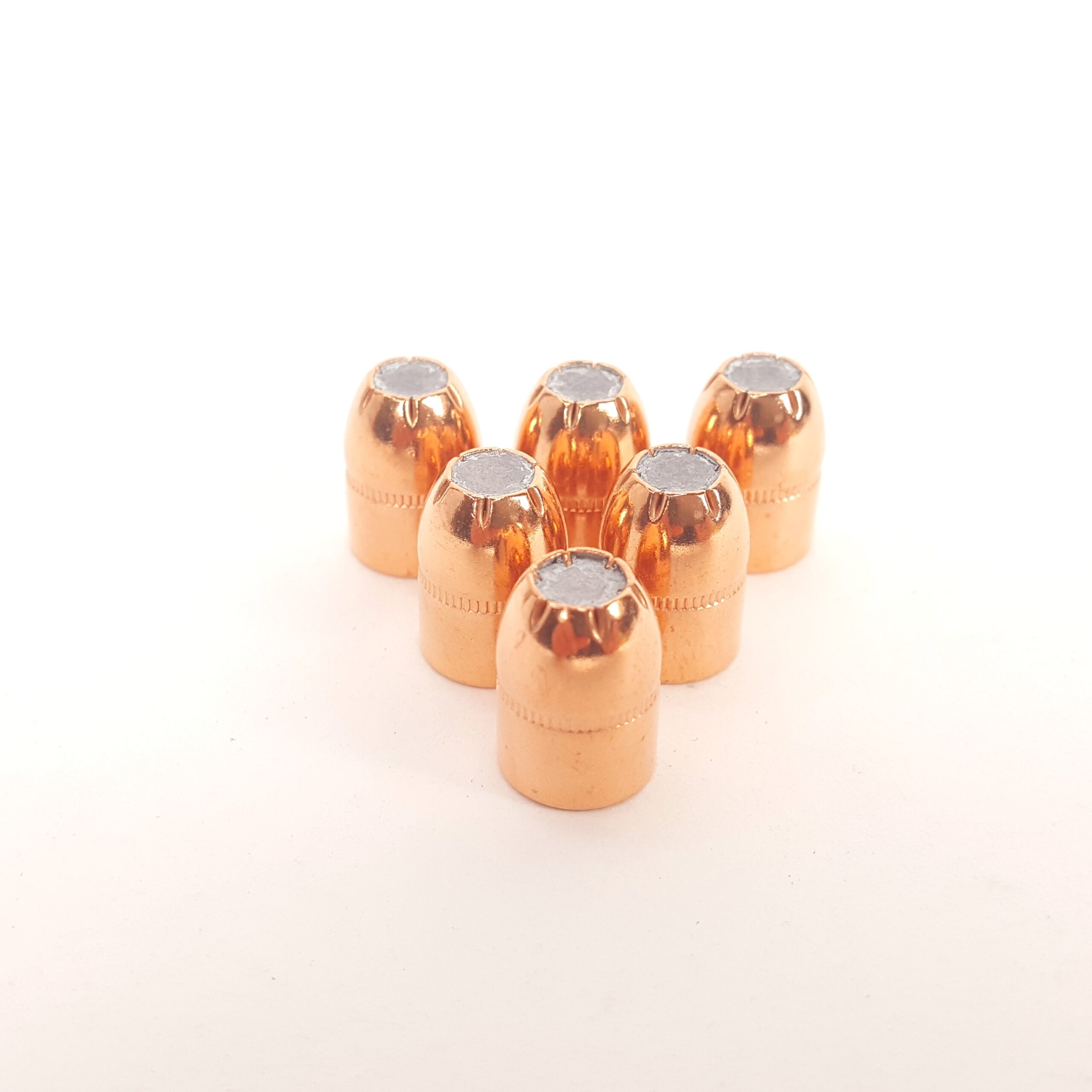
Bullet: Gold Country Badger .44 caliber, 240-grain (Gold Country Ammo)
Ammunition: Handloaded by GCA
Test Type: Chronograph + target correlation
Charge Structure: Three distinct powder charge weights
Rounds Fired: 6 rounds per charge (18 total)
Observation
During chronograph testing and target confirmation, three distinct powder charge weights were fired in six-round strings. Velocity was recorded for each round and correlated to point of impact on target.
Two notable patterns emerged:
- Velocity clustering correlated with elevation clustering
Shots with nearly identical velocities consistently printed at the same elevation. Shots with slightly different velocities (on the order of 3–5 fps) printed at measurably different elevations, approximately 1 to 1½ inches apart. - The middle charge weight exhibited greater vertical dispersion
Compared to both the lighter and heavier charge weights, the middle load showed noticeably more erratic vertical placement on the target.
Initial Interpretation
At typical .44 Magnum velocities and distances, a 3–5 fps difference in muzzle velocity alone is insufficient to account for 1″+ vertical separation through exterior ballistics alone. This suggests that velocity was not the causal mechanism, but rather a marker for something else.
The more likely explanation is barrel exit timing relative to barrel motion, not raw velocity.
Specifically:
- Changes in powder charge altered pressure curve shape and dwell time
- Small differences in time-to-exit shifted the bullet’s release point within the barrel’s vibrational cycle
- These timing differences manifested as small but repeatable changes in muzzle angle at exit
- Muzzle angle differences, not drop math, produced the observed vertical separation
Node Behavior Indicated
The pattern observed across the three charge weights is consistent with classic node behavior:
- Lower charge: relatively stable elevation band
- Middle charge: increased vertical dispersion (between nodes)
- Higher charge: return to a stable elevation band
The middle load appears to sit between two stable exit phases, where small timing variations produce amplified vertical movement on target.
Notably, this occurred even though velocity spreads within each charge set were relatively tight.
Bullet Geometry Considerations
The 240-grain Badger bullet used in this test features:
- A serrated jacket with slight petal exposure above the lead
- A relatively large meplat
These characteristics can make transitional ballistics effects more visible at muzzle exit, particularly in short barrels. Slight differences in gas release symmetry and early yaw behavior may further amplify the visibility of exit-timing differences on target.
This is not interpreted as a flaw, but as an honest response to launch conditions.
What This Observation Does Not Mean
- It does not mean that 3–5 fps “causes” 1″+ of drop
- It does not suggest instability in the bullet design
- It does not imply that velocity ES alone predicts vertical performance
What This Observation Does Suggest
- In short-barreled lever guns, exit timing and barrel harmonics can dominate elevation behavior
- Loads with similar velocities can print at different elevations if they exit at different harmonic phases
- A load with slightly higher ES may shoot more consistently if it resides on a stable node
- Velocity should be treated as a diagnostic signal, not the primary explanation
Relevance to Shooter’s Edge
This observation reinforces a recurring theme in Shooter’s Edge thinking:
Velocity spread describes outcomes. Exit timing explains them.
Understanding why a load behaves as it does allows shooters to tune intelligently rather than chasing numbers that may not correspond to on-target results.
Status
This entry is recorded as an observational Range Report.
No load recommendations or conclusions are drawn beyond what was directly observed.
Further testing at additional distances may clarify how long these elevation bands persist beyond the transitional window.
Related Chapters & Technical Notes:
TN-17 — Rifle vs Revolver Loads: Mechanical Realities
Chapter 32 — Barrel Dynamics & Pressure Behavior in Pistol-Caliber Lever Rifles