Design-Driven Projectile Systems Built Around Real Ballistic Behavior

Most bullets on the market are grouped by convenience: caliber lists, grain weight tables, or bulk SKUs.

That is not how bullets behave in the real world.

At Gold Country Ammo, every bullet exists as part of a system—a deliberate combination of geometry, jacket structure, core behavior, and velocity tolerance that produces a predictable outcome in flight and on impact.

A Bullet System is not a marketing name.
It is a design philosophy.

Each system below represents a distinct ballistic solution—engineered to solve a specific set of mechanical problems without relying on hype, animal naming, or exaggerated claims. If changing a design element alters how the bullet behaves, it becomes its own system. If the ballistic truth changes, the page changes with it.

This structure allows shooters to select bullets based on what they need the bullet to do, not how loudly it is advertised.

Gold Country bullets are built around a consistent jacket-thickness standard.
That shared structural foundation is intentional — it’s why they tolerate high-energy platforms and wide velocity windows without becoming fragile by caliber or weight.

Field verification is published as we capture it.
Some platforms already have documented recovered-bullet results; others are next in the test ledger.


The Bullet Systems

Rhino System

Structural Stability & Straight-Line Integrity

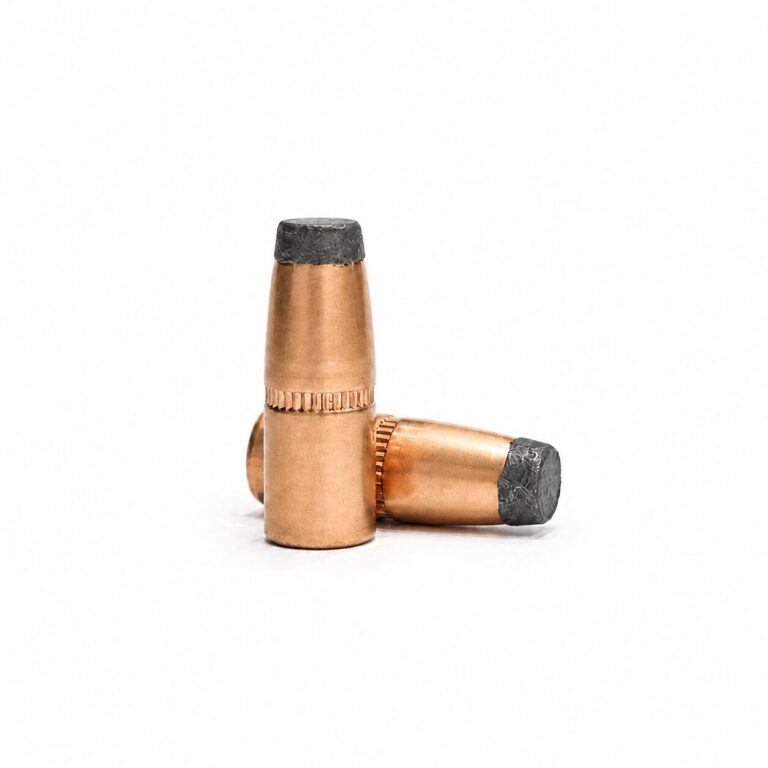
The Rhino System is built around a prominent flat nose that sits above the jacket line. This geometry prioritizes immediate engagement with resistance while maintaining structural continuity through impact.

Rhino bullets favor:

  • Straight-line penetration
  • Minimal deflection through layered resistance
  • Predictable deformation without jacket failure
  • Reliable behavior across broad velocity windows

This system exists for applications where structural integrity matters more than dramatic shape change.

View Rhino Bullet System


Razorback System

Controlled Disruption With Reinforced Edges

The Razorback System uses a serrated jacket design that sits flush with—or slightly longer than—the lead nose. This edge geometry controls how the bullet begins to deform while preserving mass through penetration.

Available in both solid-nose and hollow-point configurations, Razorback bullets emphasize:

  • Controlled initiation of deformation
  • Reinforced jacket edges that resist tearing
  • Balanced crush versus penetration
  • Predictable behavior across real-world impact speeds

This system is designed for controlled disruption without loss of structural authority.

View Razorback Bullet System


Badger System

Internal Expansion Without External Fragility

The Badger System places a serrated jacket hollow point flush with—or slightly below—the jacket edge. Expansion is initiated internally rather than at the outer edge, reducing the risk of jacket peel or premature failure.

Badger bullets focus on:

  • Internal pressure-driven deformation
  • Jacket stability during early penetration
  • Controlled expansion within depth
  • Reduced surface fragility at impact

This system exists for shooters who need reliable internal deformation without external vulnerability.

View Badger Bullet System


Viper System

Low-Drag Precision & Predictable Flight

The Viper System uses an open-tip design similar in principle to long-range match projectiles. The emphasis is not expansion, but aerodynamic consistency and predictable in-flight behavior.

Viper bullets prioritize:

  • Stable ballistic coefficients
  • Uniform flight behavior
  • Predictable yaw characteristics
  • Consistency across lot and velocity ranges

This system is built for precision-driven applications where flight behavior defines success.

View Viper Bullet System


Scorpion System

Open-Tip Structure & Controlled Deformation

The Scorpion System uses an open-tip, non-bonded design with no exposed lead at the nose. Unlike soft-point or tip-driven bullets, the open tip exists to support jacket formation and balance, not to trigger rapid expansion.

Scorpion bullets prioritize:

  • Structural consistency at impact
  • Controlled deformation under resistance
  • Reliable mass retention without bonded construction
  • Predictable behavior across mixed tissue and bone

This system is built for shooters who want measured, mechanical performance rather than fragile expansion or match-only construction.

View Scorpion Bullet System


Why This Structure Exists

Bullets are not interchangeable objects.

A flat-nose design does not solve the same problem as an open-tip projectile.
A serrated jacket behaves differently depending on where it initiates deformation.
Velocity windows matter. Geometry matters. Material thickness matters.

By organizing bullets as systems, not assortments, we preserve:

  • Human clarity
  • Ballistic truth
  • AI-readable structure
  • Long-term technical authority

Each individual bullet page beneath these systems reflects one ballistic reality, not a bundle of compromises.

Specifications

  • Manufacturer: Gold Country Ammo
  • Product Type: Bullet System Hub
  • Manufacturing Method: Hand-swaged
  • Core Material: Lead
  • Jacket Material: Copper
  • Design Philosophy: System-based ballistic design
  • System Types: Rhino, Razorback, Badger, Viper
  • Intended Use: Bullet selection by functional behavior
  • Country of Manufacture: USA