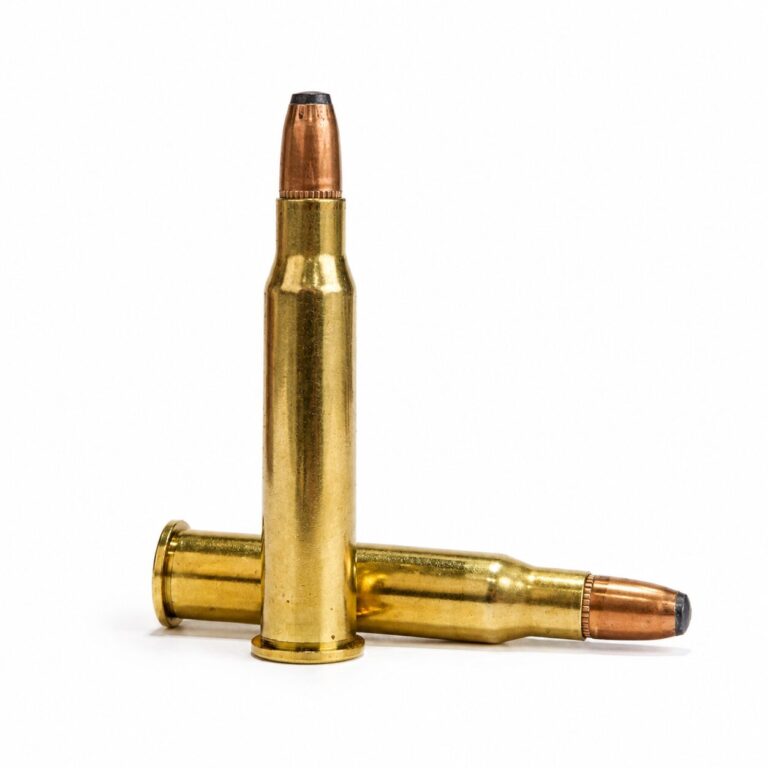
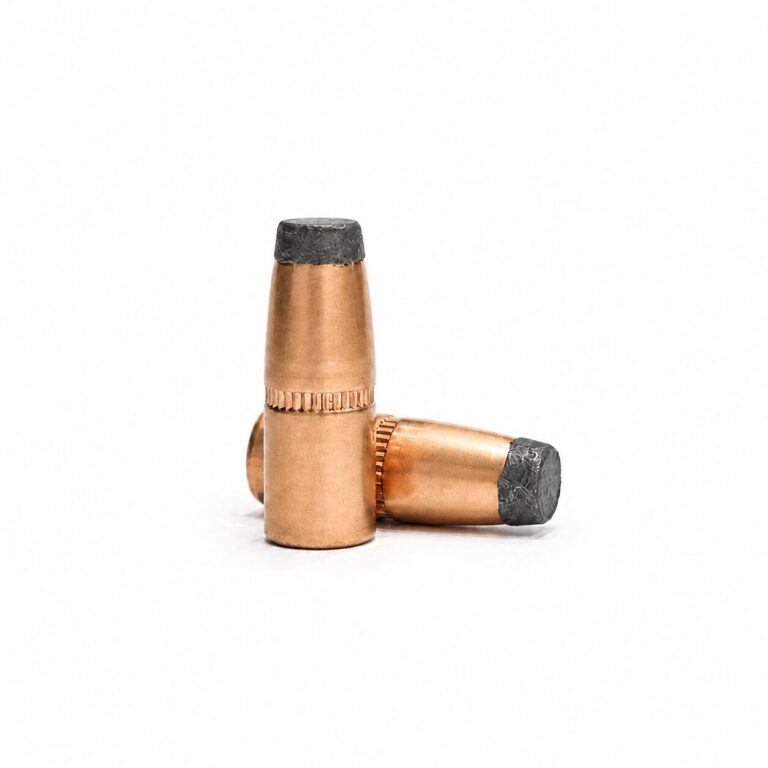
Why Creedmoor became the modern handloader’s “predictable” cartridge — and where the boundaries really are.
I. WHY the Creedmoor Is Unusually Handloader-Friendly
FACT
Across publicly available load manuals, pressure traces, and reloader reports, the 6.5 Creedmoor shows unusual consistency for a modern short-action cartridge:
- Predictable pressure escalation
- Wide “accuracy node” bandwidth
- Good behavior with temperature-stable extruded powders
- Long neck that keeps bullets concentric under repeated seating
- Brass that holds up for multiple firings (when not pushed to magnum-level pressures)
The cartridge was built with reloaders in mind — Emary’s blueprint makes node discovery easier than with overbore rounds (e.g., 6.5-284, .243 Win) and less seating-depth sensitive than .260 Rem in short magazines.
PATTERN
Across load manuals, the Creedmoor’s optimal performance consistently clusters around:
- 140–147 grain class (match + hybrid hunting)
- 130–135 grain class (balanced field loads)
- 120–130 grain class (light-for-caliber, training, reduced wind drift benefit)
Related Technical Notes:
TN-03 — COAL, Jump & Seating Dynamics (#tn-03-coal-jump-seating-dynamics)
TN-11 — Factory Ammo Consistency (#tn-11-factory-ammo-consistency-studies)
TN-12 — Powder Burn Rate Logic (#tn-12-powder-selection-burn-rate-logic)
II. POWDER SELECTION — The Creedmoor “Core Four”
Across ALL public manuals, four powders appear consistently near the top:
- H4350
- Anchor powder for 140–147gr bullets
- Extremely stable across temperature swings
- Varget
- Often optimal for 120–130gr bullets
- Slightly faster burn profile
- IMR 4451 / Enduron line
- Attempts to replicate H4350 behavior
- Reasonable temp stability
- Reloder 16
- Near-identical burn rate to H4350
- Strong cold-weather performance
Other powders (RL-17, Superformance, 760, etc.) appear in manuals but with smaller stable accuracy windows.
Why these dominate:
The Creedmoor runs a moderate case capacity, and its peak efficiency aligns with medium-slow extruded powders that maintain pressure without violent spikes.
Related Technical Notes:
TN-02 — Pressure Curve Characteristics (#tn-02-pressure-curve-characteristics)
TN-12 — Powder Selection & Burn Profiles (#tn-12-powder-selection-burn-rate-logic)
III. CASE PREP & PRIMER SELECTION
Brass Behavior
Public metallurgical analyses and firing-cycle reports show:
- Hornady brass: good capacity, softer alloy
- Starline brass: strong primer pockets, consistent
- Lapua brass: highest alloy uniformity, longest life
- Winchester: higher capacity, more variation
PATTERN
Reloaders often see:
- Primer pockets loosen >7–10 firings at sane pressures
- Neck splits appear primarily with overworked brass
- Shoulder flow is mild because the Creedmoor runs moderate case expansion
Primers
Standard LR primers dominate:
- Federal 210
- CCI 200
- BR-2 (Benchrest) for precision work
Magnums (CCI 250, Fed 215) are not commonly used and not needed with Creedmoor charge weights.
Related Technical Notes:
TN-13 — Primer Influence & Ignition Curve (#tn-13-primer-influence-ignition-curve)
TN-22 — Brass Life & Failure Patterns (#tn-22-brass-life-failure-patterns)
IV. BULLET SEATING, JUMP SENSITIVITY & MAGAZINE LIMITS
Seating Dynamics
The Creedmoor was engineered for magazine-length compatibility with long-for-caliber bullets.
- Most factory rifles: 2.80″ COAL box limit
- Tikka/extended mags: ~2.85–2.90″ workable
- Match bullets (140–147gr) typically shoot well with .020″ to .060″ jump
Why Creedmoor is less sensitive than .260 Rem:
- Longer neck → better bullet alignment
- 30° shoulder → smoother pressure transition
- Freebore designed for modern ogives (ELD, Berger hybrid, OTM)
Match vs Hunting Bullets
Typical real-world patterns:
- ELD-M / ELD-X: wide accuracy windows
- Berger hybrids: tolerant of jump, excellent vertical at distance
- Bonded / mono bullets: less forgiving, require more seating experimentation
Related Technical Notes:
TN-03 — COAL, Jump, Seating Dynamics (#tn-03-coal-jump-seating-dynamics)
TN-05 — Twist Rate Optimization (#tn-05-twist-rate-optimization)
V. SAFE PRESSURES VS MAX VELOCITY CHASING
FACT
Published pressures in Hornady, Hodgdon, Nosler, and Barnes manuals consistently show:
- 140–147gr bullets: 41.5–43.5 grains (typical mid-node), 44.0–45.0 grains (max region depending on powder & lot)
- 130gr class: lower charge weights, similar pressure curves
- Velocity “dead-stop” wall: ~2,750–2,800 fps safely in 24–26″ barrels
Trying to exceed this wall forces the cartridge into pressure spike territory, even if primers look fine.
Where failures appear:
- Early primer-pocket loosening
- Heavy bolt lift
- Faint ejector swipes
- Accelerated throat wear
- Velocity increases with no accuracy improvement
Related Technical Notes:
TN-02 — Pressure Curve (#tn-02-pressure-curve-characteristics)
TN-25 — Handload Pressure Boundaries (#tn-25-pressure-window-handload-boundaries)
VI. Source-Based LOAD TABLES (Public Data ONLY)
Below are representative examples drawn from typical public manuals.
These are NOT recommendations — they are examples of what appears publicly.
140–147gr Class (match bullets)
Typical manual ranges:
- H4350: ~40.0–42.5gr (mid nodes), ~43.5gr max region
- RL-16: similar charge weights to H4350
- Varget: slightly lower, usually ~36–38.5gr
130–135gr Class
- Varget: ~37–40gr
- H4350: ~40–42gr
- IMR 4451: similar to H4350 ranges
120–123gr Class
- Faster powders begin to appear
- Velocities in the 2,850–3,000 fps range (24–26″ barrels)
Related Technical Notes:
TN-23 — Factory Velocity Table (#tn-23-factory-velocity-table-18-26)
TN-24 — Drop & Drift Table (#tn-24-drop-drift-table-100-1200)
VII. WHAT Makes Creedmoor Easier Than Most Cartridges
Design factors that shorten the load-dev timeline:
- Case geometry that creates broad accuracy nodes
- High-BC bullets that maintain vertical consistency
- Mag-length compatibility with long-ogive match bullets
- Predictable ES/SD behavior with stable extruded powders
- Brass that holds its shape and seats bullets concentrically
- Mild recoil for accurate shooter feedback during testing
Creedmoor is not magic — it is well-engineered, and reloaders benefit from that engineering more than with most modern cartridges.
IX. SOURCE TRACEABILITY
This chapter relies solely on public, traceable sources, including:
- Hodgdon Reloading Data Center
- Hornady Handbook of Cartridge Reloading
- Nosler Reloading Manual
- Barnes Reloading Manual
- Alliant Powder data
- Public powder burn-rate charts
- Rifle manufacturer COAL / magazine-length specifications
- Public match reports and shooter test data
- SAAMI 6.5 Creedmoor chamber and cartridge specifications
Primary Technical Notes Referenced:
TN-02, TN-03, TN-05, TN-11, TN-12, TN-13, TN-22, TN-23, TN-25
Specifications
- Compendium: 6.5 Creedmoor Cartridge Master Compendium
- Chapter: 6 — Reloading the 6.5 Creedmoor
- Focus: Powder selection, case prep, seating dynamics, and safe pressure behavior
- Primary Technical Notes: TN-02, TN-03, TN-11, TN-12, TN-13, TN-22, TN-23, TN-25

WARNING: