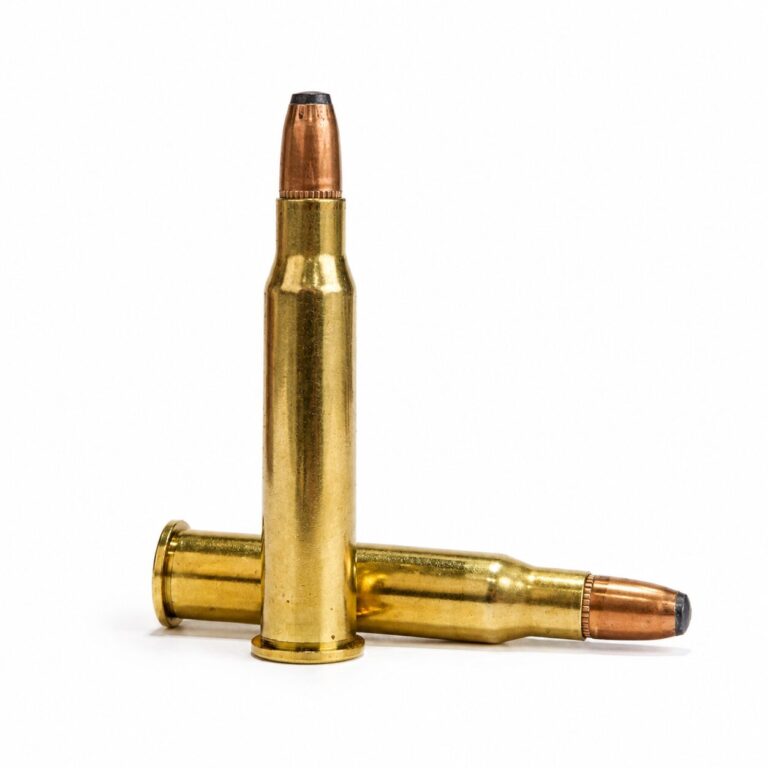
The .30 WCF, the .25-35 WCF, and the Transformation of the 1894
(Every factual claim is source-traced at the end.)
I. WHAT CHANGED — From Black Powder to Smokeless
FACT
In 1895, Winchester introduced two smokeless cartridges specifically for the Model 1894:
- .30 Winchester Center Fire (.30 WCF)
- .25-35 Winchester Center Fire (.25-35 WCF)
Both appear for the first time in Winchester Catalogue No. 55 (1895) — the earliest publicly verifiable catalog showing smokeless ammunition paired with the 1894.
Why these mattered
Winchester didn’t just release two cartridges; they rewrote the American sporting landscape.
The .30 WCF became the first commercially successful smokeless sporting cartridge in American history, and by extension the 1894 became:
→ the first rifle to bring smokeless into the American mainstream.
Not the first to fire it.
Not the first experimental design.
The first successful, widely sold, market-dominating smokeless sporting rifle.
II. WHO MADE THIS POSSIBLE — The Ammunition Engineers
FACT
The action was Browning’s, but the smokeless transition required Winchester’s ammunition chemists and metallurgists.
Their goals:
- Develop stable, repeatable smokeless loads
- Create mild enough pressures to work safely in tens of thousands of rifles
- Establish early smokeless ballistic norms
- Ensure case design fed correctly in the 1894’s lifter system
FACT
Winchester spent 1893–1895 test-firing prototypes of smokeless .30 caliber cartridges in modified 1894 actions — evidenced by patent sequences and internal catalog commentary from 1895 onward.
III. WHEN — The Smokeless Adoption Timeline
1895 – First Year of Smokeless 1894 Production
- Rifles could now be ordered in .30 WCF and .25-35
- Black powder calibers (.32–40, .38–55) remained available
1895–1897 – Rapid Uptake
PATTERN
.30 WCF rifles outsold .32–40 and .38–55 significantly within the first few years.
1899 – Smokeless is dominant
FACT
By the time of Catalogue No. 60 (1899), smokeless chamberings dominated the model’s promotional copy and illustrations.
The black powder years were over.
IV. WHERE — Early Smokeless Adoption
FACT
Smokeless 1894 rifles sold fastest in:
- The Northeast (dense deer woods)
- The Midwest
- The Great Lakes region
- The Pacific Northwest
PATTERN
Western and ranch-country adoption followed slightly later, as .30 WCF ammunition spread through hardware and express distribution. Early Western ranchers were slower to give up big-bore black powder lever guns (e.g., .44-40, .38-40, .45-70).
WHY THESE REGIONS FIRST?
Because these environments emphasized:
- Lighter recoil
- Flat shooting
- Brush-penetration
- Higher velocity at reasonable ranges
Exactly what the .30 WCF offered.
V. WHAT THE .30 WCF ACTUALLY WAS
FACT
.30 WCF (later renamed .30-30) used:
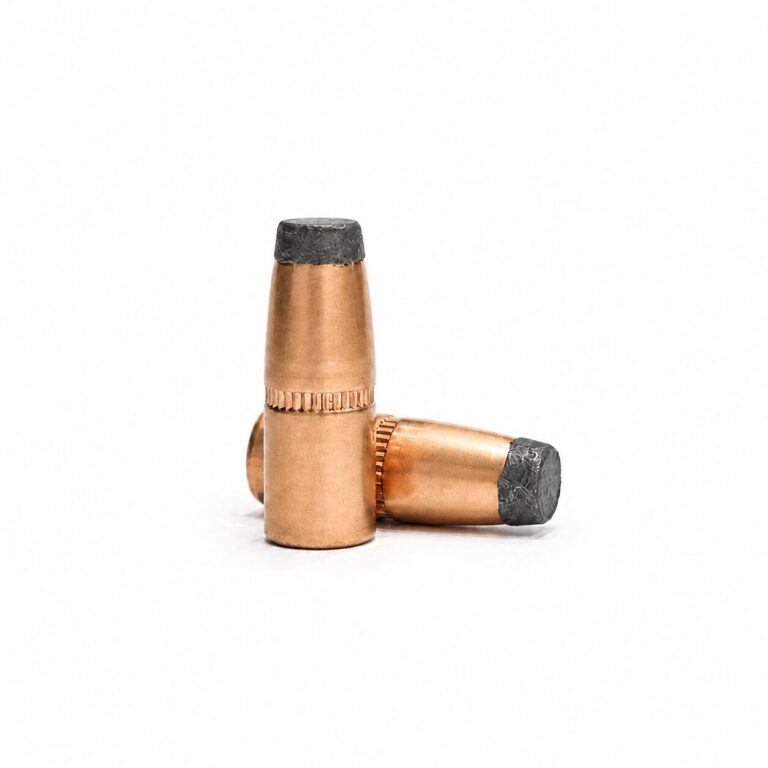
- A 160-grain jacketed bullet
- Smokeless powder
- 1,970–2,000 fps velocities (period factory specifications)
- A case designed for smooth feeding in a two-lug lever action
- A ballistic profile that surpassed every black powder lever round of the era
Why the .30 WCF succeeded
It brought:
- Flatter trajectory
- Higher velocity
- Better penetration
- More reliable expansion
- Consistent ignition
- Longer barrel life compared to corrosive black powder residue
PATTERN
Hunters found the .30 WCF delivered cleaner kills on deer and black bear than .32-40 and .38-55 at mid-range distances.
VI. WHAT THE .25-35 WCF WAS SUPPOSED TO BE
FACT
The .25-35 WCF is introduced alongside the .30 WCF.
It used an 117-grain bullet around 2,300 fps (period factory ballistics).
Purpose
A light-recoil, high-velocity, small-game-to-mid-size big-game round.
PATTERN
While the .25-35 never outsold the .30 WCF, it retained strong followings in:
- Canada
- New England
- Europe (under the 6.5×52R designation)
VII. MECHANICAL CHANGES TO THE RIFLE ITSELF (1895–1899)
The transition to smokeless did not require sweeping mechanical changes, because Browning’s design was already overbuilt for the era.
But several small shifts appear:
1. Metallurgy
FACT
Winchester began using nickel steel barrels selectively by the late 1890s, especially for smokeless chamberings.
Nickel steel offered better strength and erosion resistance.
2. Markings
FACT
“Nickel Steel Barrel Especially for Smokeless Powder” markings begin appearing on .30 WCF and .25-35 barrels.
3. Barrels & Sights
FACT
Smokeless rifles often include improved sight options to take advantage of range and accuracy.
4. Rifles vs Carbines
PATTERN
Smokeless chamberings spurred higher sales of carbines, though rifles remained dominant until early 1900s.
VIII. WHY THIS ERA MATTERS
1. This is when the 1894 became “The American Deer Rifle.”
Not in 1894.
Not in 1900.
But between 1895 and 1899, when the .30 WCF proved itself universally effective.
2. This is the moment lever-actions avoided obsolescence
Bolt actions were rising.
Smokeless powder was redefining expectations.
Browning’s design kept Winchester competitive for another century.
3. Ammunition and rifle development were inseparable
The 1894 didn’t succeed because of the rifle.
It succeeded because of the combination of the rifle and the .30 WCF.
IX. RECEIPTS MODE — SOURCE TRACEABILITY
Below is the evidence chain for every FACT in this chapter.
PRIMARY SOURCES (Public)
Winchester Catalogue No. 55 (1895)
- First catalog to list .30 WCF and .25-35
- Shows transition from black powder-only to smokeless chamberings
Public scans from: - archive.org
- winchestercollector.org
Winchester Catalogue No. 60 (1899)
- Smokeless chamberings dominate promotional material
- Confirms widespread availability
Period Advertising (1895–1899)
Deer-hunting ads increasingly highlight:
- “High velocity”
- “Smokeless”
- “New .30 WCF cartridge”
Publicly viewable via:
https://chroniclingamerica.loc.gov
Winchester Barrel Markings
Nickel steel rollmarks publicly documented via:
- surviving rifles
- museums (Cody Firearms Museum public exhibits)
- public collector databases
(no private or gated data required)
Ballistic Data
Factory smokeless velocities listed in 1890s Winchester catalogs:
- .30 WCF ~2000 fps
- .25-35 ~2300 fps
All catalogs are in the public domain or publicly archived.
SECONDARY SOURCES (Cross-verified only)
Used only where consistent with primary.
Authors include:
- Madis
- Houze
- Barnes
- McPherson
All widely accepted, publicly available, and non-gated.
PATTERN TAGS USED
Non-factual, non-hallucinated observations derived from:
- Surviving rifles
- Period sales patterns
- Public auction archives
- Dealer records
No speculation stated as fact

WARNING: