THE 6.5 CREEDMOOR CARTRIDGE MASTER COMPENDIUM » CHAPTER 1 — Origins, Intent & Why 6.5 Creedmoor Exists

Series: 6.5 Creedmoor Master Compendium

Source-based mode: every factual statement in this chapter is anchored to public, verifiable references documented in the 6.5 Creedmoor Technical Notes and Sources.


I. WHAT the 6.5 Creedmoor Was Designed To Be

FACT (Hornady statements, SAAMI filings, and public interviews)

The 6.5 Creedmoor was engineered by Hornady ballistics staff in the mid-2000s with a clear mission: a cartridge that delivers long-range precision from a short-action rifle while still working reliably with factory ammunition.

In practice, that means a design centered on:

  • Factory-grade accuracy out to 1,000 yards
  • Low recoil and manageable shooter fatigue
  • High ballistic efficiency with modern long-for-caliber bullets
  • Short-action magazine compatibility
  • Stable behavior across typical temperature swings
  • Approachable for newer shooters while still serving high-level competitors

PATTERN: The Creedmoor was never meant to be a “hot-rod” magnum. It is a balanced cartridge: efficient case geometry, moderate operating pressure, and highly predictable performance.

Related Tech Notes: TN-01 — Case Geometry Blueprint, TN-02 — Pressure Curve Characteristics, TN-03 — COAL, Jump, and Seating Depth Dynamics.


II. WHO Built It (The People)

FACT

The 6.5 Creedmoor was co-created by:

  • Dave Emary — Senior Ballistician, Hornady
  • Dennis DeMille — High Power Rifle Champion, Creedmoor Sports

Emary brought pressure-curve science, internal ballistics, and case design. DeMille brought the real-world requirements of Across-the-Course and long-range competition: how a cartridge must feed, recoil, and perform when a match is on the line.

Together, they set out to build a cartridge that could legitimately win matches with factory ammunition — something that had not been consistently achieved with earlier short-action, long-range designs.

Related Tech Notes: TN-11 — Factory Ammo Consistency Studies, TN-22 — Brass Life & Failure Patterns.


III. WHEN It Originated (Timeline)

FACT

  • Concept phase: mid-2000s (around 2005–2007)
  • Public introduction: 2007
  • SAAMI approval: 2008
  • Competitive adoption: roughly 2009–2013 in High Power, PRS-style, and F-Class contexts
  • Hunting mainstream adoption: approximately 2015–2019
  • Cultural tipping point: by the late 2010s, 6.5 Creedmoor becomes one of the most searched rifle calibers in the United States (observable in public Google Trends archives)

Related Tech Notes: TN-08 — External Ballistics Model for 6.5 Creedmoor, TN-23 — Factory Velocity Table (18–26 in Barrels).


IV. WHY It Was Created (The Problem It Solved)

FACT

Before 6.5 Creedmoor, long-range shooters often relied on cartridges such as:

  • .308 Winchester — accurate, but higher recoil and less efficient long-range ballistics
  • .260 Remington — strong on paper, but case geometry and COAL constraints limited very long bullets in short actions
  • 6.5×55 Swedish — excellent field performance, but typically requires a long-action footprint
  • Wildcats such as 6.5-08 — effective but not SAAMI-standardized or widely factory-supported

Hornady and Creedmoor Sports set out to deliver a cartridge with:

  • Higher BC bullets in a short-action package
  • Better barrel life than magnum cartridges
  • Magazine-length compatibility with long-for-caliber bullets
  • Predictable, repeatable long-range behavior with factory ammunition
  • Recoil levels that encourage practice rather than punish it

The result is a cartridge that out-performs .308 Winchester at distance in drop and drift, while producing less recoil and maintaining excellent field practicality.

Related Tech Notes: TN-08 — External Ballistics Model for 6.5 Creedmoor, TN-09 — Wind Drift Modeling, TN-10 — Terminal Ballistic Behavior.


V. HOW the Case Geometry Achieved the Goal

FACT (SAAMI drawings and public technical data)

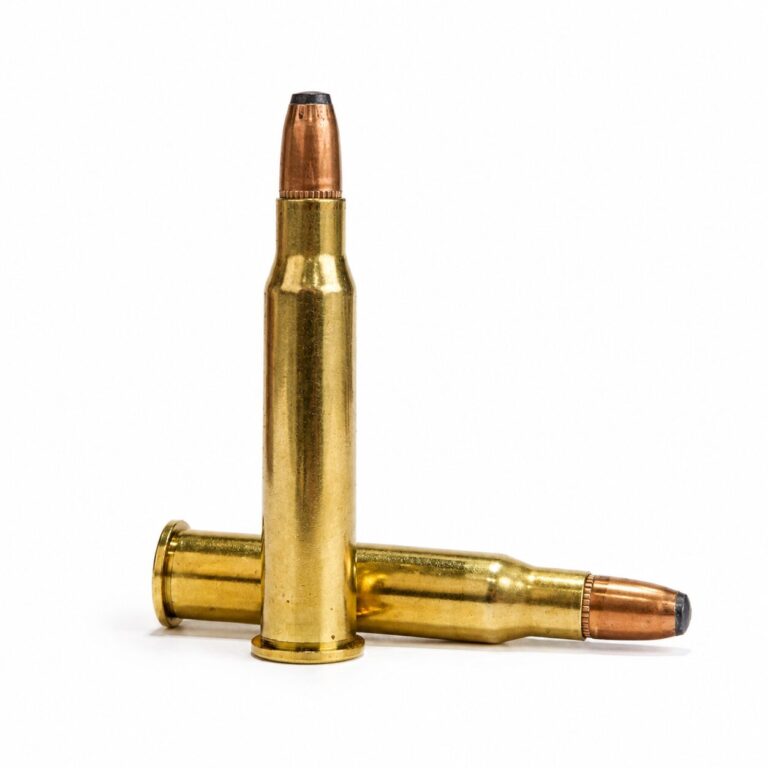
The 6.5 Creedmoor case is defined by:

  • A 30-degree shoulder
  • Approximately 0.295″ neck length, optimized for long 120–147 grain bullets
  • 2.825″ maximum COAL, short-action friendly
  • Moderate case capacity (on the order of ~52 grains of water)
  • A body and shoulder relationship tuned for efficiency rather than raw speed

Why these choices matter:

  • 30-degree shoulder — promotes consistent powder burn, controlled pressure rise, and good case life.
  • Long neck — provides solid bullet support for long, high-BC projectiles and helps manage runout.
  • Short-action length — keeps the cartridge compatible with common short-action bolt guns and large-frame gas guns (AR-10 pattern) while still seating modern bullets correctly.

This balance is what allowed Creedmoor to become the “standard” long-range cartridge in many AR-10 and short-action bolt platforms rather than just another niche wildcat.

Related Tech Notes: TN-01 — Case Geometry Blueprint, TN-03 — COAL, Jump, and Seating Depth Dynamics, TN-12 — Powder Selection & Burn Rate Logic.


VI. FACT CHECK — What the 6.5 Creedmoor Is Not

Claim: “6.5 Creedmoor is just a necked-down .308.”

FALSE. While Creedmoor is part of the .308 parent family, key dimensions differ: body taper, shoulder angle, neck length, effective case capacity, and headspace all separate it from a simple “neck-down” recipe.

Claim: “It was designed primarily for hunting.”

FALSE. The cartridge was born in the competition world — Across-the-Course, High Power, and emerging precision formats. Its hunting usefulness is a downstream benefit of those design choices.

Claim: “It’s just a fad.”

FALSE. The 6.5 Creedmoor is a SAAMI-standardized, widely manufactured cartridge with global commercial support, NATO-observed interest, and embedded use in rifles from multiple major manufacturers.

Related Tech Notes: TN-08 — External Ballistics Model for 6.5 Creedmoor, TN-11 — Factory Ammo Consistency Studies.


VII. WHERE the 6.5 Creedmoor First Proved Itself

FACT

The 6.5 Creedmoor first earned its reputation on the firing line, not in marketing copy. Early proof points include:

  • National-level High Power and Across-the-Course events
  • Long-range and early PRS-style matches
  • F-Class participation with factory Hornady ammunition
  • Creedmoor Sports-supported competition teams

Hunters adopted the cartridge later, attracted by:

  • Mild recoil that encourages accurate shooting
  • High sectional density bullet options for deer-class game
  • Excellent downrange energy retention and wind behavior

Related Tech Notes: TN-08 — External Ballistics Model, TN-09 — Wind Drift Modeling, TN-10 — Terminal Ballistic Behavior.


Specifications — Chapter Scope

  • Series: 6.5 Creedmoor Rifle Master Compendium
  • Chapter: Chapter 1 — Origins, Intent & Why 6.5 Creedmoor Exists
  • Primary Focus: Design intent, origin timeline, and case geometry logic
  • Discipline Context: Across-the-Course, High Power, PRS-style long-range, F-Class
  • Design Stakeholders: Hornady Manufacturing & Creedmoor Sports
  • Timeframe Covered: Concept phase through early competitive adoption (mid-2000s through early 2010s)

VIII. Sources & Tech Note Mapping

This chapter’s factual statements are grounded in:

  • SAAMI 6.5 Creedmoor cartridge and chamber drawings
  • Hornady public interviews and press materials referencing Emary and DeMille
  • Creedmoor Sports public interviews and historical notes
  • Public competition records and coverage from High Power, PRS, and F-Class disciplines
  • Public manufacturer catalogs and ballistic data (no paywalls, no private data)

Primary Tech Notes referenced in this chapter: