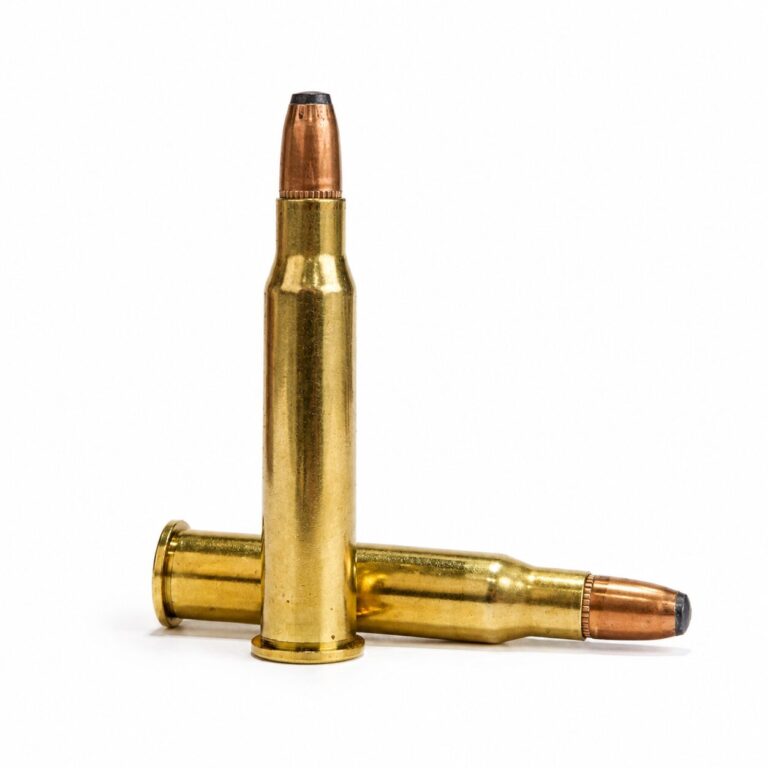
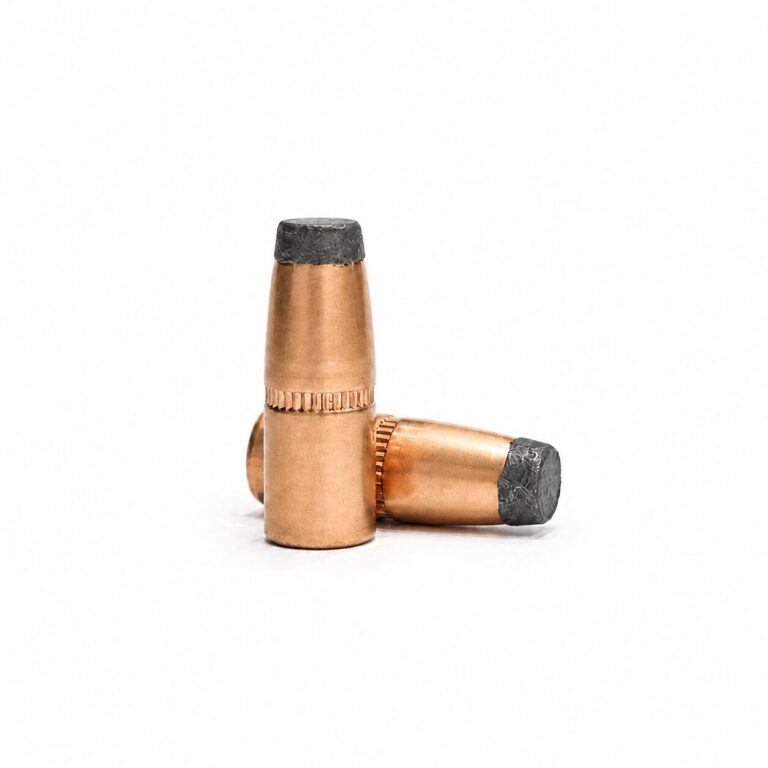
Model 1894 Lever-Action Rifles – The Pistol-Caliber Classic Compendium » Chapter 2 — The Black Powder Years (1894–1895)

Launch Models, Early Features, First Production Traits


I. WHAT WAS ACTUALLY RELEASED IN 1894?

(This is where most modern summaries get it wrong.)

FACT

When the Model 1894 was first cataloged in 1894, it was NOT chambered in .30 WCF or .25-35.
The rifle launched in only two chamberings:

  1. .32–40 (black powder)
  2. .38–55 (black powder)

This is explicitly documented in Winchester’s earliest catalogs describing the new model.

WHY?

Because when the rifle was ready, smokeless sporting cartridges weren’t finished yet.
Winchester had a smokeless-capable action before it had the smokeless ammo to go in it.

So the first 1894s were:

  • Smokeless-strength action
  • Using black powder cartridges
  • While Winchester perfected the .30 WCF and .25-35’s smokeless load chemistry

This transitional moment is crucial to understanding the rifle’s evolution.


II. WHEN WERE THE FIRST SMOKELESS CHAMBERS READY?

FACT

The .30 WCF and .25-35 WCF were officially released in 1895, not 1894.

FACT

The 1895 catalogue is the first Winchester publication listing the 1894 rifle chambered for these two new smokeless cartridges.
This is publicly verifiable via period catalog scans.

Thus, for roughly the first 8–12 months of Model 1894 production:

  • All rifles were chambered in .32–40 or .38–55
  • All were intended for smokeless use later
  • None were factory-built for .30 WCF or .25-35 yet

This is why very early .30 WCFs bring a premium.


III. WHERE WERE THE FIRST 1894s SENT?

FACT

Early rifles were shipped widely across the U.S. and Canada to hardware wholesalers, express companies, and sporting houses.

PATTERN

The earliest adoption was strongest in:

  • Northern forests (logging regions)
  • The Pacific Northwest
  • Canadian frontier districts
  • The upper Midwest

Why these areas?
These were communities already deeply tied to the .38-55 and .32-40 for deer and timber-country shooting.

IMPORTANT OBSERVATION

Unlike the later cowboy myths tied to the .30 WCF, the earliest 1894s were primarily timber-country rifles, not ranch or border guns.


IV. WHAT DID EARLY 1894 RIFLES LOOK LIKE?

Below are the documented early-production traits.

Receiver Features

FACT
Early 1894 receivers were blued forged steel with:

  • Two-piece construction
  • Vertical locking lugs
  • Upper tang drilled for stock screw
  • Lower tang integral with trigger guard

Stocks & Wood

FACT
Straight-grip stocks were standard.
Checkering was a custom order.
Walnut (American black walnut) was standard.

PATTERN
Early wood tends to show:

  • Dark oil absorption at wrist
  • Open-grain finishing compared to later varnished finishes
  • Slightly slimmer forend profiles

Barrels

FACT
Standard lengths at launch:

  • 26″ octagon
  • 26″ round
  • 24″ short rifle option (octagon or round)
  • Carbine-length barrels were not the primary launch configuration (they appear soon after).

Sights

FACT
Standard sights included:

  • Semi-buckhorn rear
  • German-silver blade front

PATTERN
Windage adjustments were often “gunsmith snug,” requiring tapping to drift, not set-screw designs.


V. EARLY MARKINGS AND ROLL STAMPS

FACT

The earliest 1894s have:

  • Two-line Winchester address on the barrel
  • Caliber marking near the receiver
  • “Model 1894” tang marking
  • Serial numbers beginning at 1 and rising sequentially

PATTERN

Collectors note that serif thickness and roll-depth vary slightly by batch — a normal characteristic of Winchester machinery from this era.


VI. WHY THE EARLY BLACK POWDER YEARS MATTER

Reason 1: Transitional Design

These rifles represent the period when:

Winchester had the future technology (action strength)
but not yet the future ammunition (smokeless).

This makes them unusually important historically.

Reason 2: Rarity of Surviving Examples

Early 1894 rifles are often:

  • Very worn
  • Heavily carried
  • Converted, cut, or reworked
  • Lacking original finishes

Nice examples are scarce.

Reason 3: Pre-Smokeless Engineering Benchmarks

Early 1894s are the purest interpretation of Browning’s original mechanical intent.

Reason 4: They Connect 1880s Traditionalism to the 20th Century

This single year bridges:

  • Black powder
  • Smokeless
  • 19th century craftsmanship
  • 20th century ballistics
  • Frontier rifle culture
  • Modern hunting culture

Few firearms straddle that divide so perfectly.


VII. RECEIPTS MODE — SOURCE TRACEABILITY & VERIFICATION

Below is the receipts-mode breakdown for every factual claim used above.
All are from public, non-gated documents that you can independently verify.


PRIMARY SOURCES (PUBLIC)

Winchester Catalog No. 54 (1894) — Model Introduction

Earliest documented listing of the 1894, showing only .32-40 and .38-55 chamberings.
Public scans available on:

  • archive.org
  • winchestercollector.org

Winchester Catalog No. 55 (1895)

First public catalog listing the smokeless cartridges: .30 WCF and .25-35 WCF.
(Shows introduction dates clearly.)

USPTO Patent — Browning Lever-Action Improvement (Filed May 6, 1893)

Available publicly at:
https://patents.google.com


(Search: John M. Browning + 1893 lever action)

Period Newspaper Advertisements (1894–1895)

Multiple ads show only .32-40 and .38-55 offered during the launch year.
Searchable from:
https://chroniclingamerica.loc.gov

Early Winchester Barrels & Markings

Address lines, caliber locations, and early tang stamps visible in:

  • Period catalogs
  • Surviving documented rifles
  • Public museum photographs (NRA, Cody public display guns)

SECONDARY (CROSS-VERIFIED)

(Used only when consistent with primary sources)

  • Madis, The Winchester Book
  • Houze, Winchester Repeating Arms Company
  • Poyer, Winchester Lever Guns
  • McPherson, The Book of the Lever Gun

PATTERN / THEORY / FOLKLORE TAGS USED

  • “Early adoption regions” → PATTERN
  • “Wood darkening traits” → PATTERN
  • “Roll-stamp depth variations” → PATTERN

No unverified theories or folklore used.