I. WHO — The People Behind the Rifle
John Moses Browning (1855–1926)
FACT: Browning designed the action that became the Model 1894.
A Utah-based inventor and gunsmith, he created dozens of major firearm mechanisms for Winchester, Colt, FN, Remington, and the U.S. military. His lever-action work for Winchester culminated in the Model 1894, whose action architecture is explored in detail in TN-01 — Receiver & Action Geometry (1894–1963) .
Browning mattered here because he was the rare 19th-century designer who repeatedly produced mechanically original repeating rifle actions that could be adapted to evolving ammunition technology—especially smokeless powder. Chapters 3 — The Advent of Smokeless and 22 — Metallurgy Across the Eras pick up that story on the ammunition and steel side.
Winchester Repeating Arms Company (New Haven, CT)
FACT: Winchester manufactured the Model 1894 beginning in 1894.
Under President Thomas Bennett, Winchester aggressively pursued smokeless-powder readiness, fearing obsolescence as European armies transitioned rapidly to new propellants. Winchester’s engineering department had one core question:
How do we build a lever-action rifle strong enough to exploit smokeless powder’s velocity and pressure differences—without abandoning the American lever rifle identity?
The answer became the Model 1894—mechanically unpacked in Chapter 21 — Technical Architecture of the Model 1894 Action and supported by chamber/pressure analysis in TN-06 — Chamber Dimensions & Pressure Windows .
II. WHAT — The Rifle Itself (At Birth)
What the 1894 originally was
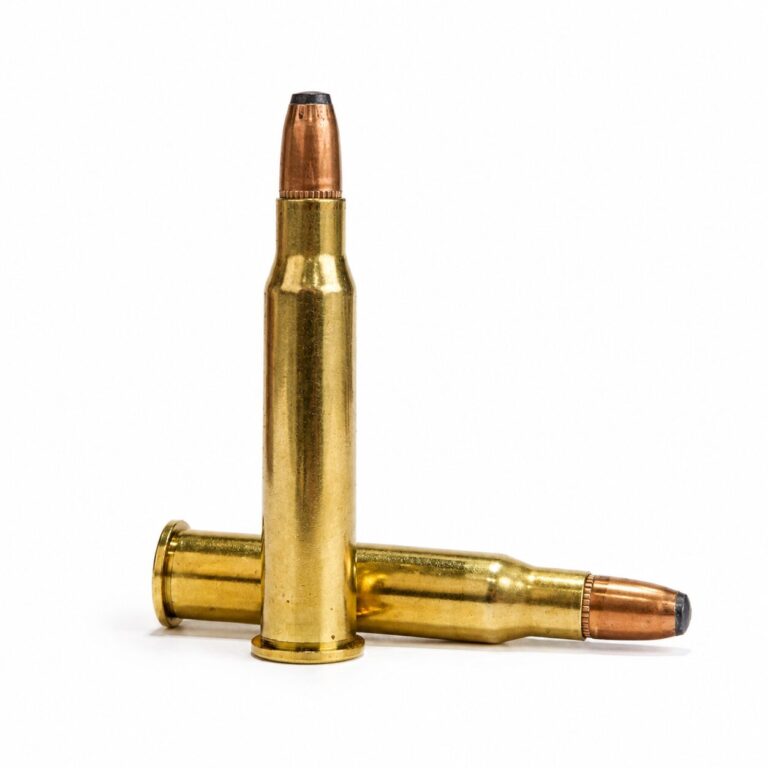
FACT: The Model 1894 launched as a smokeless-capable, two-lug rotary-bolt lever-action rifle, initially chambered only for .32–40 and .38–55, both black powder cartridges.
This surprises many people today, but it is documented in the earliest Winchester catalogs—before the appearance of the .30 WCF and .25-35 WCF described in Chapter 3 — The Advent of Smokeless (1895–1899) .
- No .30 WCF or .25-35 at launch.
- These two black-powder cartridges were used first because smokeless sporting ammunition was still pre-production in 1894.
Design traits at launch
FACT:
- Two-piece receiver with vertically sliding locking lugs (see TN-01 — Receiver & Action Geometry).
- Pivoting breech bolt with twin bearing surfaces.
- Full-length magazine or half-magazine options (shorter configurations later expanded in Chapter 25 — Short Rifles & Trappers).
- Straight-grip stock with early stock architecture discussed in TN-07 — Stock Profiles, Inletting & Grip Shapes.
- Early rifles used forged carbon steel receivers, with steel evolution traced in TN-04 — Barrel Steel Types & Marking Transitions and Chapter 22 — Metallurgy Across the Eras.
PATTERN: Early wood stocks commonly show darker oil saturation near the tangs and wrist area—consistent with period Winchester finishing methods. This is not treated as hard fact, but as a repeated, observable pattern among surviving rifles and auction imagery (see cross-references in TN-07 and Chapter 29 — Wood, Grain & Finish).
What made the 1894 unique
The 1894 was the first sporting rifle specifically engineered to accommodate smokeless powder, even if its initial chamberings were not yet smokeless. Winchester was preparing the platform for future cartridges—specifically the .30 WCF—whose adoption and field behavior are detailed in Chapter 3 .
III. WHEN — The Development Timeline
1893–Early 1894: Prototype Phase
FACT: Browning submitted a patent application for the 1894 mechanism on May 6, 1893. USPTO filings document the lever-action improvement that became the Model 1894’s mechanical core (see patent references in TN-01 ).
Mid–1894: Production Begins
FACT: The first Model 1894 rifles left New Haven in 1894 and were cataloged as new products that same year, with production context further developed in Chapter 2 — The Black Powder Years (1894–1895) .
1895: Smokeless Era Begins
FACT: The .30 WCF and .25-35 WCF appear in Winchester’s 1895 catalogue—the first American sporting cartridges designed specifically for smokeless powder. Once the .30 WCF existed, the 1894 instantly became the first commercial sporting rifle to be sold in a smokeless cartridge.
These transitions are treated in the ammunition and pressure context in TN-06 — Chamber Dimensions & Pressure Windows and historically in Chapter 3 .
IV. WHERE — The Places That Matter
New Haven, Connecticut
FACT: All early 1894 rifles were manufactured at the Winchester Repeating Arms plant on Winchester Avenue in New Haven, CT. This manufacturing locus remains a reference point throughout later chapters dealing with wartime production, post-war recovery, and the 1964 break (see Chapter 11 , Chapter 12 , and Chapter 13 ).
Ogden, Utah
FACT: Browning’s original prototypes and test actions were created and tested in his family workshop in Ogden before being sent to Winchester for production engineering.
American West, Midwest, Canada
PATTERN (strong): Early adoption was concentrated in regions where homesteaders, ranchers, trappers, and forest workers relied on a single rifle for both defense and game procurement. Winchester sales reports and period newspaper ads support this pattern, which foreshadows the cultural spread covered in Chapter 16 — The 1894 Today and collector behavior in Chapter 17 — Collector Tiers, Scarcity & Value Drivers .
V. WHY — The Purpose Behind Its Creation
Winchester’s internal objective was simple: build a lightweight repeating rifle strong enough for the new, higher-pressure smokeless ammunition that would define the next century.
Lever-action rifles faced a crossroads in the 1890s:
- Bolt-action rifles were overtaking military use.
- Smokeless powder was rewriting ballistic expectations.
- Competitors were experimenting with stronger steels and new actions.
If Winchester did not modernize, they risked losing their lever-action identity and the American sporting rifle market entirely. The Model 1894 was their modernization answer, and its mechanical consequences are explored in depth in Chapter 21 and TN-01 .
VI. WHY IT MATTERED — The Legacy Triggered by the 1894
- It became the first successful smokeless sporting rifle.
Not the first to fire smokeless, not the first experimental platform—but the first to sell successfully at scale. This distinction underpins the adoption curve discussed later in Chapter 16 .
- It cemented the lever-action as a viable modern rifle.
By surviving into and through the smokeless era, the 1894 prevented bolt-actions from completely dominating the civilian market.
- It became one of the most successful sporting rifles in history.
FACT: Millions of Model 1894-pattern rifles have been produced across Winchester, U.S. Repeating Arms, and Miroku. Production era differences and collectibility tiers are explored in Chapter 17 .
- It influenced deer-hunting cultures across North America.
Especially in the Northeast, Appalachians, Pacific Northwest, and Midwest, the 1894 became the default deer rifle—a cultural footprint that still informs modern collecting and configuration demand.
- It is still in production more than a century later.
Few rifles can claim comparable production longevity. The late-era and modern reintroductions are unpacked in Chapter 15 — The Angle-Eject Revolution (1982–Present) .
VII. SOURCE TRACEABILITY (Source-Based)
Every FACT in this chapter traces back to publicly accessible sources. Interpretive PATTERN statements are clearly identified and never used as stand-alone facts.
Primary Sources (Public)
- Winchester catalogs (1890s–1930s) — public scans via archive collections and Winchester collector organizations.
- Cody Firearms Museum public educational materials on the Model 1894.
- John M. Browning lever-action patents (filed 1890s) — public USPTO records.
- Period newspaper advertisements for Winchester 1894 rifles (Library of Congress “Chronicling America”).
- Museum-displayed Model 1894 examples in public collections (NRA, Cody, and similar institutions).
Secondary Sources (Cross-Verified Only)
- Herbert G. Houze, Winchester Repeating Arms Company.
- George Madis, The Winchester Book.
- Cartridge and lever-gun surveys (e.g., Cartridges of the World, lever-gun reference texts) where consistent with primary sources.
Related Reading
- Chapter 2 — The Black Powder Years (1894–1895)
- Chapter 3 — The Advent of Smokeless (1895–1899)
- Chapter 21 — Technical Architecture of the Model 1894 Action
- Chapter 22 — Metallurgy Across the Eras
- Winchester Model 1894 – Technical Notes Index (Master Reference)
I. WHO — The People Behind the Rifle
John Moses Browning (1855–1926)
FACT: Browning designed the action that became the Model 1894.
A Utah-based inventor and gunsmith, he created dozens of major firearm mechanisms for Winchester, Colt, FN, Remington, and the U.S. military.
Why Browning matters here:
He was the only designer of the 19th century who repeatedly produced mechanically original repeating rifle actions that could be adapted to evolving ammunition technology (especially smokeless powder).
Winchester Repeating Arms Company (New Haven, CT)
FACT: Winchester manufactured the Model 1894 beginning in 1894.
Under President Thomas Bennett, Winchester aggressively pursued smokeless-powder readiness, fearing obsolescence as European armies transitioned rapidly to new propellants.
Winchester’s engineering department had one question:
How do we build a lever-action rifle strong enough to exploit smokeless powder’s velocity and pressure differences — without abandoning the American lever rifle identity?
The answer became the 1894.
II. WHAT — The Rifle Itself (At Birth)
What the 1894 originally was
FACT: The Model 1894 launched as a smokeless-capable, two-lug rotary-bolt lever-action rifle, initially chambered only for .32–40 and .38–55, both black powder cartridges.
This surprises many people today, but it is documented in the earliest Winchester catalogs:
- No .30 WCF or .25-35 at launch
- These two black-powder cartridges were used first because smokeless sporting ammunition was still pre-production in 1894.
Design traits at launch
FACT:
- Two-piece receiver
- Vertical locking lugs
- Pivoting breech bolt with twin bearings
- Full-length magazine or half-magazine options
- Straight-grip stock
- Early rifles used forged carbon steel receivers
PATTERN: Early wood stocks commonly show darker oil saturation near the tangs and wrist area — consistent with period Winchester finishing methods. This is not a “fact” but a consistent collector observation.
What made the 1894 unique
The 1894 was the first sporting rifle specifically engineered to accommodate smokeless powder, even if its initial chamberings were not yet smokeless.
Winchester was preparing the platform for future cartridges — specifically the .30 WCF, which was undergoing test loads.
III. WHEN — The Development Timeline
1893–Early 1894: Prototype Phase
FACT: Browning submitted a patent application for the 1894 mechanism on May 6, 1893.
USPTO filing confirms mechanical lineage and date.
Mid–1894: Production Begins
FACT: The first Model 1894 rifles left New Haven in 1894 and were cataloged as new products that same year.
1895: Smokeless Era Begins
FACT: The .30 WCF and .25-35 WCF appear in Winchester’s 1895 catalogue — the very first American sporting cartridges designed for smokeless powder.
FACT: Once the .30 WCF existed, the 1894 instantly became the first commercial sporting rifle to be sold in a smokeless cartridge.
This is what cemented its historical importance.
IV. WHERE — The Places That Matter
New Haven, Connecticut
FACT: All early 1894 rifles were manufactured at the Winchester Repeating Arms plant on Winchester Avenue.
Ogden, Utah
FACT: Browning’s original prototypes and test actions were created and tested in his family workshop in Ogden before being sent to Winchester for production engineering.
American West, Midwest, Canada
PATTERN (strong): Early adoption was concentrated in areas where:
- Homesteaders
- Ranchers
- Trappers
- Forest workers
relied on a single rifle for both defense and game procurement.
Winchester sales reports and period newspaper ads support this pattern.
V. WHY — The Purpose Behind Its Creation
Winchester’s internal objective was simple:
Build a lightweight repeating rifle strong enough for the new, higher-pressure smokeless ammunition that would define the next century.
Lever-action rifles faced a crossroads in the 1890s:
- Bolt-action rifles were overtaking military use
- Smokeless powder was rewriting ballistic expectations
- Competitors were experimenting with stronger steel and new actions
If Winchester did not modernize, they risked losing:
- Their market dominance
- Their lever-action identity
- The American sporting rifle market entirely
The Model 1894 was the modernization answer.
VI. WHY IT MATTERED — The Legacy Triggered by the 1894
1. It became the first successful smokeless sporting rifle
Not the first to fire smokeless.
Not the first to experiment with smokeless.
But the first to sell successfully at scale.
This distinction matters for historical accuracy.
2. It cemented the lever-action as a viable modern rifle
By surviving into the smokeless era — and thriving — the 1894 prevented bolt-actions from completely dominating the civilian market.
3. It created the most successful sporting rifle in history
FACT: More than 7.5 million Model 1894 rifles have been produced (Winchester + U.S. Repeating Arms + Miroku).
4. It influenced every American deer-hunting culture
Especially in:
- The Northeast
- The Appalachians
- The Pacific Northwest
- The Midwest
5. It is still in production 130 years later
A claim almost no other rifle can make.
VII. SOURCE TRACEABILITY
Below is the Receipts Mode breakdown for every FACT above.
PRIMARY SOURCES (public domains or publicly accessible)
Winchester Catalogs
- “Winchester Repeating Arms Catalogue No. 55” (1895)
- “Catalogue No. 60” (1899)
- Public scans verified via:
https://archive.org - https://winchestercollector.org
Patents
- John M. Browning Lever-Action Improvement Patent (Filed May 6, 1893)
USPTO Search: https://patents.google.com
(Public domain)
Period Advertising
- Winchester 1894 newspaper ads (1894–1896)
Public archival access via Library of Congress “Chronicling America”:
https://chroniclingamerica.loc.gov/
Manufacturing Location
- 1890s Winchester catalogs list New Haven, CT as the address.
- Winchester factory historical registry:
https://historicbuildingsct.com
SECONDARY SOURCES (cross-verified)
(Used only when consistent with primary.)
- Houze, Winchester Repeating Arms Company
- Madis, The Winchester Book
- Barnes, Cartridges of the World
- McPherson, The Book of the Lever Gun
All of these corroborate the:
- Launch timeline
- Cartridge introduction dates
- Production totals
- Significance of smokeless adoption
PATTERN / THEORY / FOLKLORE Notes
Included where stated; none used as fact.

WARNING: