Description
Why the .30-30 Still Exists
The .30-30 Winchester was never designed to chase numbers.
It was designed to work in places where hunting actually happens — timber, brush, broken ground, and short sight lines where shots appear quickly and decisions must be made without delay. It is a cartridge built around human movement, fast handling rifles, and realistic distances.
That reality hasn’t changed.
Which is why the .30-30 hasn’t gone anywhere.
Why 170 Grains Became the Standard
Within the .30-30’s velocity window, bullet weight determines how consistently a projectile behaves after impact.
Over decades of real use, the cartridge converged on the 150–170 grain range because it balanced:
-
sufficient mass for penetration
-
reliable expansion at moderate velocities
-
controllable recoil in light rifles
-
predictable behavior across short and intermediate distances
This was not tradition for tradition’s sake.
It was convergence driven by field results.
Why This Ammunition Exists for the .30-30
This load exists because the .30-30 never needed reinvention — it needed discipline in bullet behavior.
When Hornady developed the InterLock flat-nose for the .30-30, the problem they were solving was not accuracy or speed. It was controlled expansion without structural failure.
At typical .30-30 impact velocities, conventional soft points could expand too aggressively and shed mass. Fully jacketed designs could pass through with insufficient energy transfer. Hornady’s answer was mechanical control.
The result was the InterLock® system.
The InterLock Concept — Expansion With Boundaries
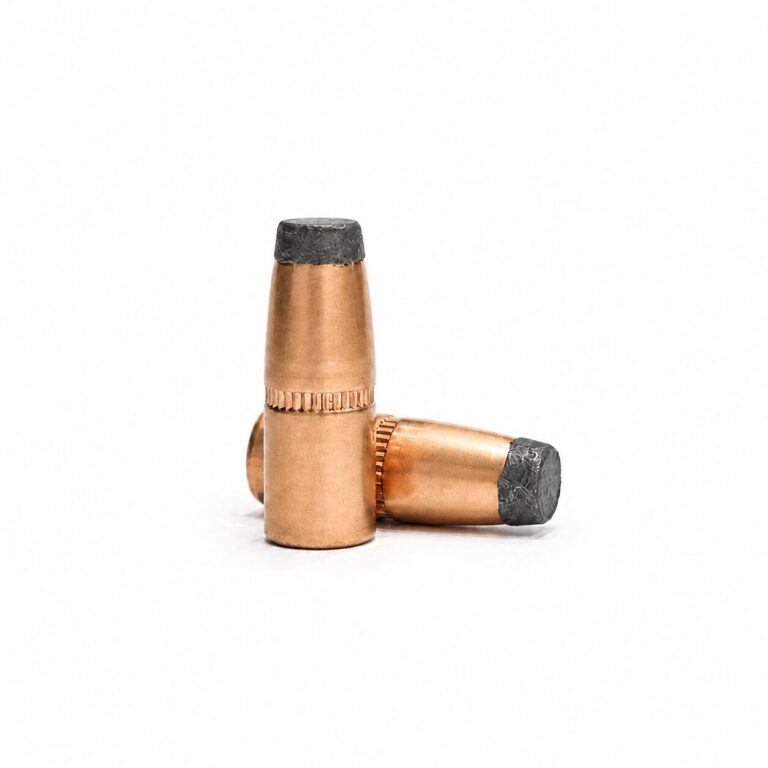
The InterLock bullet uses an internal locking ring that mechanically anchors the lead core to the jacket. This limits jacket-core separation as the bullet expands.
In practical terms, this design:
-
initiates expansion reliably at .30-30 velocities
-
retains mass as resistance increases
-
continues penetrating after expansion begins
-
behaves consistently across varying shot distances
The flat-nose profile remains mandatory for tubular magazines, but the internal structure governs how far the bullet expands — and how long it keeps moving afterward.
This is not expansion for effect.
It is expansion with restraint.
Working Velocities and Platform Fit
This .30-30 Winchester load produces an approximate muzzle velocity of 2,106 FPS, placing it squarely within the operating window the InterLock bullet was designed around.
At these velocities, the InterLock system allows the bullet to:
-
open reliably
-
resist premature fragmentation
-
maintain forward momentum
Actual terminal behavior will vary with impact conditions, but the design intent is clear: predictable expansion without loss of integrity.
Flat-Nose Geometry — Compatibility First
The flat-nose profile ensures:
-
safe use in tubular magazines
-
reliable feeding in lever-action rifles
-
immediate force application on impact
This geometry is not optional in the .30-30 platform — it is foundational. Hornady’s design respects that reality rather than attempting to bypass it.
Handloaded with New Starline Brass
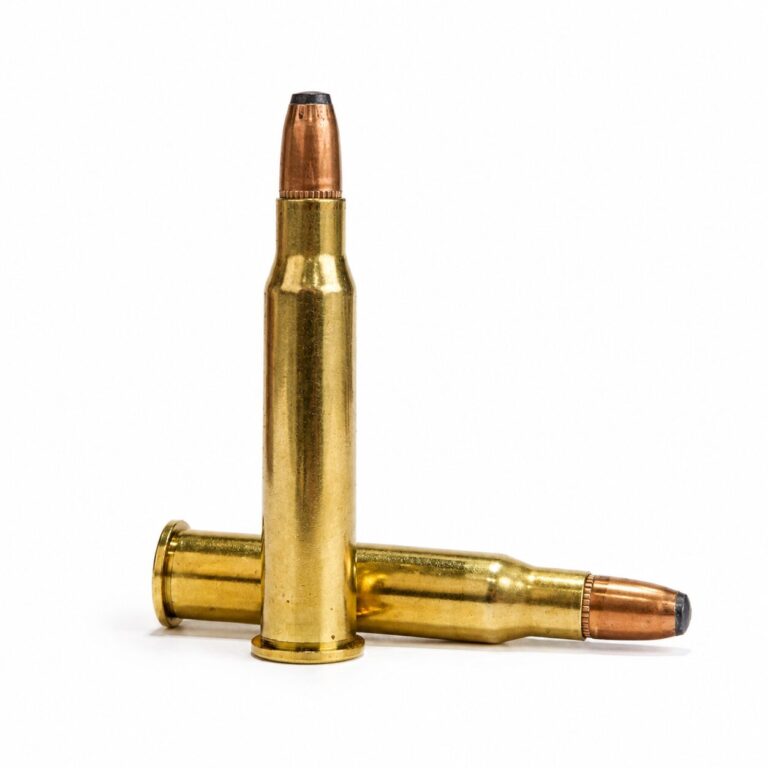
Gold Country Ammo loads this cartridge using new Starline brass, ensuring:
-
consistent case dimensions
-
reliable neck tension
-
repeatable ignition
This supports uniform performance across lever-action platforms while maintaining the traditional handling characteristics the .30-30 is known for.
Where This Ammunition Fits
Gold Country .30-30 Winchester ammunition with Hornady InterLock bullets is intended for:
-
close to intermediate-distance shots
-
timber, brush, and broken terrain
-
fast presentations with limited time
-
hunters who value controlled expansion over velocity extremes
It is a traditional solution to a persistent reality.
System Support and Reference
This ammunition is supported by Gold Country Ammo compendiums, technical notes, platform documentation, and related ammunition offerings, and is referenced within:
- Gold Country Ammunition Systems
- Lever Gun Ammunition System
- Lever-Gun Bullet Geometry — Technical Note
It exists not as an isolated product, but as part of a documented ecosystem that explains why this approach works — and where it fits.
Related Guides & Technical Notes
- .30-30 Winchester — Lever-Gun Bullet Selection & Platform Guide
- Lever-Gun Platforms — Bullet Selection, Safety & Mechanical Reality
- Lever-Gun Fundamentals — Geometry, Safety & Feeding Reality
Additional platform-specific technical notes and compendium chapters apply
Notes (Internal Consistency Reminder)
-
Velocity values are based on published load data and may vary by barrel length, chamber dimensions, and environmental conditions.
-
This listing intentionally avoids expansion claims and velocity-driven marketing language in favor of outcome-based performance description.
Specifications
- Manufacturer: Gold Country Ammo
- Bullet Manufacturer: Hornady
- Cartridge: .30-30 Winchester
- Bullet: 170-Grain Hornady InterLock Flat-Nose
- Bullet Construction: Lead core with InterLock® ring, copper jacket
- Bullet Type: Flat-nose, tubular magazine safe
- Case: New Starline brass
- Muzzle Velocity: ~2,106 FPS (based on published load data)
- Intended Platforms: Lever-action rifles with tubular magazines
- Cartridge Class: Traditional legacy cartridge
- Packaging: 20-round Gold Country box
- Manufactured In: USA
Does not ship to New York City, Massachusetts, Alaska or Hawaii. FPID, FPOD required for New Jersey, Connecticut and Illinois residents.
New York and California residents must have ammunition shipped to a licensed FFL dealer or ammunition dealer for transfer.


WARNING:
Reviews
There are no reviews yet.